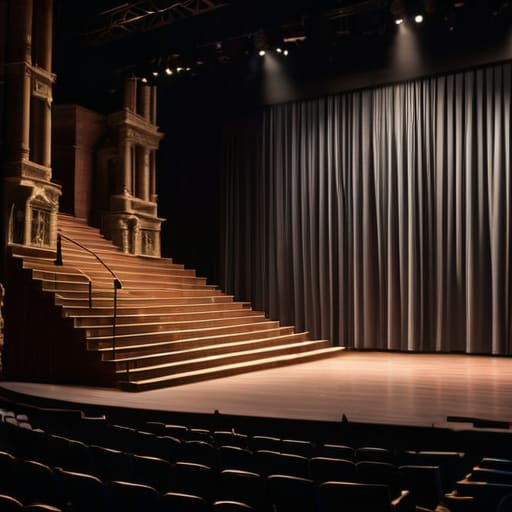
I remember sitting in the back row of a drafty community playhouse in Ann Arbor, watching a production struggle under the weight of its own ambition. They had spent a fortune on revolving platforms and motorized scenery, yet the stage felt utterly hollow—a collection of expensive objects that lacked a single ounce of soul. It’s a common mistake to think that theatre set design is a contest of mechanical complexity or budget size. In reality, when a set is too loud, it drowns out the very human stories trying to breathe within it, leaving the audience feeling more like spectators at a trade show than witnesses to a moment.
I’m not here to talk to you about high-tech hydraulics or how to drain your bank account on plywood. Instead, I want to share what I’ve learned from decades of observing how light, shadow, and texture can build a world without saying a word. We are going to look at the quiet art of creating space—the kind of intentional, understated design that invites you to linger in the atmosphere long after the house lights come up. Let’s focus on the details that matter.
Table of Contents
Mastering Scenography Principles for Lasting Impressions

When I look at a stage, I’m rarely looking for the grand spectacle; I’m looking for the way a single chair or a weathered doorway tells a story before a single line is spoken. This is where true spatial storytelling in theatre takes root. It isn’t just about filling a void with scenery, but about understanding how the placement of objects can dictate the very breath of the actors. A well-placed shadow or a carefully positioned piece of furniture can create a sense of intimacy or isolation that no script could ever dictate on its own.
To achieve this, one must look beyond the surface and embrace the fundamental scenography principles that govern how we perceive depth and emotion. It’s a delicate dance of balance and tension. I often find myself sketching the way light hits a textured wall, realizing that the magic lies in the intentionality of the void. We aren’t just building rooms; we are sculpting an atmosphere. When you master the way a space breathes, you stop merely decorating a stage and start creating a world that lingers in the viewer’s mind, long after the house lights have risen.
Spatial Storytelling in Theatre Through Gentle Light

There is a particular kind of magic that happens when a spotlight doesn’t just illuminate a performer, but instead carves a shape out of the darkness. I’ve always found that the most profound moments in a play aren’t found in the grand, sweeping floods of light, but in the way a single amber glow can transform a simple chair into a lonely island. This is the heart of spatial storytelling in theatre; it is the ability to use light to dictate where the audience’s soul should wander. When light is used with intention, it defines the boundaries of the world, turning a hollow stage into a lived-in memory.
Too often, we see stages that are over-lit, leaving nowhere for the imagination to rest. But when a designer understands the nuance of dramatic space composition, they realize that shadow is just as much a tool as the light itself. By allowing certain corners of the set to remain veiled in obscurity, you invite the viewer to lean in, to wonder, and to feel the weight of the unspoken. It is in those quiet, dim intervals that the true atmosphere takes root, lingering in the mind long after the house lights have risen.
The Small Details That Hold the Weight of a Story
- Respect the texture of your materials. In my years among archives, I’ve learned that a surface tells a history; a set should be no different. Don’t settle for flat, painted plywood when a bit of real grain or a weathered fabric can catch the light and suggest a decade of lived-in struggle.
- Design for the silence between the lines. A set shouldn’t just be a backdrop for the dialogue; it should be a participant in the quiet moments. Create corners and alcoves where a character can retreat, allowing the architecture itself to hold the tension when the words run out.
- Avoid the temptation of the pristine. Life, much like a good jazz record, has its scratches and pops. A set that is too perfect feels hollow and artificial. Incorporate the slight imperfections—the scuff on a floorboard or the fray of a curtain—to give the space a soul that feels earned.
- Think in layers, not just planes. A shallow stage is a missed opportunity. Build depth through the use of varying heights and overlapping elements, creating a visual complexity that forces the eye to wander and discover, much like a stroll through an old city at dusk.
- Let the shadows do the heavy lifting. You don’t need to illuminate every inch of your world to make it real. Often, what you choose to leave in the dark is far more evocative than what you bring into the light. Use your set pieces to carve out pockets of mystery that the audience’s imagination must fill.
The Quiet Essentials of a Lasting Stage
Remember that a set shouldn’t just fill a stage; it should breathe with the characters, offering textures and corners that feel as though they’ve existed for decades before the first line is ever spoken.
Use light not merely to illuminate the actors, but to sculpt the atmosphere, letting the shadows hold as much narrative weight as the brightness itself.
Design for the memory, not just the moment, by choosing elements that linger in the mind’s eye long after the audience has stepped back out into the rush of the city streets.
## The Soul of the Stage
“A truly great set isn’t a collection of painted flats and wooden frames; it is a quiet, breathing environment that holds the weight of the story in its shadows, inviting the audience to step out of their rush and into a moment that feels permanent.”
Petra Lindgren
The Echo in the Empty Hall

As we look back at the architecture of a stage, it becomes clear that great design is never about the sheer scale of the scenery, but about the intentionality of the details. We have discussed how the careful application of scenography principles provides a foundation for narrative, and how the subtle manipulation of light can transform a simple wooden floor into a landscape of profound emotion. When you master the balance between spatial storytelling and the physical textures of the set, you stop merely building a background and start constructing a world. It is in these small, deliberate choices—the way a shadow falls across a chair or the weathered grain of a single prop—that the true essence of the play begins to breathe.
In my years spent among dusty archives and silent corridors, I have learned that the things that truly endure are those that invite us to feel, rather than just to see. A set should not just be a place where actors move; it should be a vessel for the lingering memory of the audience. As you step away from the drafting table and into the dim glow of the wings, remember that your goal is to create a space that stays with a person long after they have stepped back out into the rush of the city streets. Design with patience, design with soul, and aim for that rare, quiet magic that refuses to fade when the house lights finally come up.
Frequently Asked Questions
How do you balance the need for grand, sweeping visual statements with the quiet, intimate details that actually ground a character's world?
It’s a bit like a good jazz record; you need the sweeping melody to carry the emotion, but it’s the subtle, imperfect notes in between that make you feel the soul of the song. I find the balance lies in intention. Use your grand scale to set the mood, but let the character live in the small things—a frayed cuff, a chipped tea saucer, or the way dust dances in a single sliver of light. That’s where the truth hides.
In an age of digital projections and high-tech screens, is there still a meaningful place for the tactile, weathered textures of physical scenery?
I find myself leaning toward the physical every single time. There is a certain soul in a piece of hand-painted canvas or a weathered wooden chair that a digital projection simply cannot replicate. A screen offers perfection, but perfection is often hollow. It’s the slight fraying of a curtain or the uneven grain of a tabletop that catches the light just right, grounding the performance in a reality we can almost touch.
How can a designer ensure that the set remains a living participant in the story rather than just a static backdrop that fades into the background?
Think of the set not as a painted wall, but as a character with its own breath. To keep it from fading, you must invite texture and movement. A door that creaks with a specific weight, or a fabric that catches the light like a memory, demands attention. When a space reacts to the actors—through shifting shadows or the way a chair sits in a pool of amber light—it stops being scenery and starts being a witness.
