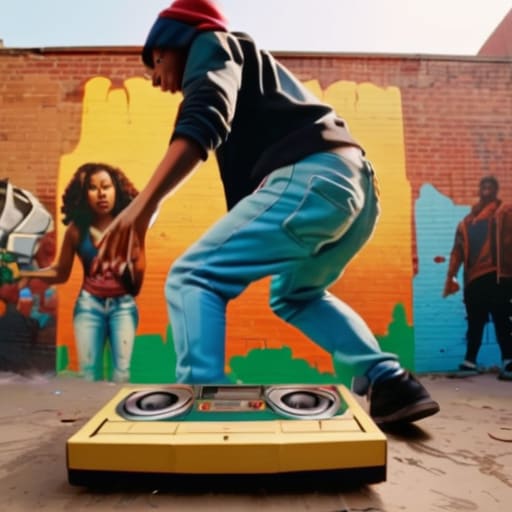
I remember sitting in a cramped, dimly lit basement studio in Detroit back in the late eighties, the air thick with the smell of ozone and old coffee. I wasn’t supposed to be there—an archivist in a room full of kids with spray paint on their fingers—but I couldn’t look away. I watched how they treated a simple drum break like a sacred relic, peeling back layers of sound with a reverence that most people reserve for classical compositions. People often mistake hip hop culture for nothing more than loud bass and bravado, but if you stop rushing to judge the surface, you’ll find a complex, meticulous architecture of rhythm and storytelling that rivals any jazz standard I’ve ever cataloged.
I’m not here to give you a textbook definition or a lecture on industry trends. Instead, I want to walk you through the grit and the grace of this movement, focusing on the elements that actually endure once the club lights fade. We are going to look past the commercial noise to find the intentionality behind the beat. My promise to you is a slow, honest exploration of the soul within the sound, stripping away the hype to find what truly matters.
Table of Contents
The Four Elements of Hip Hop Noticing the Small Details
When I look back through the archives of urban history, I’ve learned that nothing truly monumental arrives all at once; it is built piece by piece. The four elements of hip hop are much the same—they are the distinct, textured layers that, when stacked together, create something far greater than the sum of their parts. It isn’t just about the noise; it’s about the deliberate intention behind the craft.
You see it in the way a DJ manipulates a record, a practice of turntablism and DJing that requires the same precision I once applied to preserving delicate manuscripts. Then there is the visual language, that sudden burst of color on a concrete canvas that tracks the urban street art evolution. You cannot ignore the physical expression, either—the gravity-defying grace of breakdancing and street dance that turns a sidewalk into a stage. Finally, there is the spoken word, the rhythmic heartbeat that carries the message. To truly understand this movement, you have to stop listening to the surface and start noticing the small details that make each element breathe.
Golden Era Hip Hop Influence What Truly Stays With Us
When I sit down with a glass of something amber and a worn record, I often find myself drifting back to that specific stretch of the late eighties and early nineties. There was a certain alchemy in the air back then—a sense that the music wasn’t just being made, but was being discovered in the cracks of the sidewalk. The golden era hip hop influence isn’t just about the tempo or the rhyme schemes; it’s about that raw, unpolished sincerity that felt like a conversation between neighbors. It was a time when the production felt tactile, as if you could reach out and touch the dust on the drum break.
In my years archiving old city records, I’ve learned that the most enduring legacies aren’t the loudest ones, but the ones that possess a sense of intentionality. During that era, the music felt deeply rooted in its surroundings, much like the jazz I used to track through dim basement clubs. You could hear the history of hip hop music unfolding in real-time, woven through samples that carried the weight of decades. It wasn’t just a genre; it was a way of documenting a world that refused to be ignored.
A Few Ways to Listen Between the Lines
- Don’t just listen to the lyrics; pay attention to the texture of the beat. There is a certain architecture in a well-placed snare or a dusty sample that holds as much weight as any spoken word.
- Seek out the origin stories. Much like the old records I keep in my collection, hip hop carries the fingerprints of where it came from. Knowing the neighborhood or the era behind a track makes the music feel less like a product and more like a living history.
- Notice the fashion, but look closer than the labels. The way a certain silhouette or a specific shade of color moves through a music video tells a story of identity and resilience that goes far deeper than mere trends.
- Slow down your consumption. In a world of endless streaming and instant gratification, try sitting with a single album from start to finish. Let the mood of the record settle in the room before you move on to the next thing.
- Respect the craft of the DJ. Even in an age of digital perfection, there is a profound, human beauty in the way a DJ reads a room and weaves two different worlds together through a seamless transition.
What to Carry With You When the Music Fades
Look past the spectacle; the true heart of hip hop lies in the intentionality of the craft, from the precision of a lyric to the texture of a sampled beat.
Respect the lineage by listening to the pioneers, understanding that today’s rhythms are built upon the foundations laid by those who first found their voice in the streets.
Slow down and listen with purpose, allowing the music to become more than just background noise so you can truly feel the stories being told.
## The Rhythm in the Quiet Spaces
“People often mistake hip hop for mere noise, but if you sit still long enough, you’ll realize it’s actually a masterclass in preservation—a way of archiving the heartbeat of a street corner and turning it into something that refuses to be forgotten.”
Petra Lindgren
Beyond the Beat
As I sit here in the corner of this dimly lit lounge, watching the condensation drip down my glass, I realize that hip hop is far more than just a collection of rhythmic patterns or a specific era of production. It is a living, breathing archive of human experience, much like the dusty ledgers I used to catalog in the university basement. We have looked at the intricate dance of the four elements and felt the weight of the Golden Era’s influence, but the true essence lies in how these pieces interlock to create a sense of place. It is a culture built on the art of making something out of nothing, turning the concrete of a city street into a canvas for the soul.
My advice to you as you step back out into the rush of the night is this: don’t just listen to the music, listen to what it is trying to tell you about the world. Whether it’s a heavy bassline that rattles your chest or a lyric that catches you off guard in the quiet of your living room, allow yourself the luxury of a pause. We spend so much time racing toward the next thing that we forget to honor the things that actually linger in our memories long after the record stops spinning. Find your own rhythm, settle into the shadows, and make room for the music to breathe.
Frequently Asked Questions
How does the spirit of the old jazz clubs I love connect to the way a modern producer layers a beat?
It’s all in the texture, really. In those old jazz clubs, the magic wasn’t just the melody; it was the way the upright bass felt in your chest or how the drummer’s brushwork danced against the silence. A modern producer does the exact same thing. They aren’t just stacking sounds; they’re layering atmosphere, finding that perfect, gritty pocket where a sample breathes just like a live soloist would in a dimly lit room.
Beyond the music itself, how do we find the quiet, meaningful stories hidden within the art of graffiti and street style?
You have to look past the spray paint and see the intention behind the line. When I walk through the city, I don’t just see a tag; I see a person reclaiming a corner of a world that often feels indifferent to them. It’s like those old archival ledgers I used to catalog—every stroke is a signature of existence. Look for the texture, the grit, and the way a garment is worn. That’s where the real story lives.
In a world that moves so fast, how can we better appreciate the intentionality behind a classic hip hop lyric?
You have to stop treating music like background noise for a busy commute. To truly hear the intention, you must sit with it. I often find myself sitting in a quiet corner of a dimly lit room, letting a single verse breathe. Don’t just listen to the words; listen to the pauses, the grit in the voice, and the weight of the metaphor. It’s in those deliberate silences that the real poetry lives.
