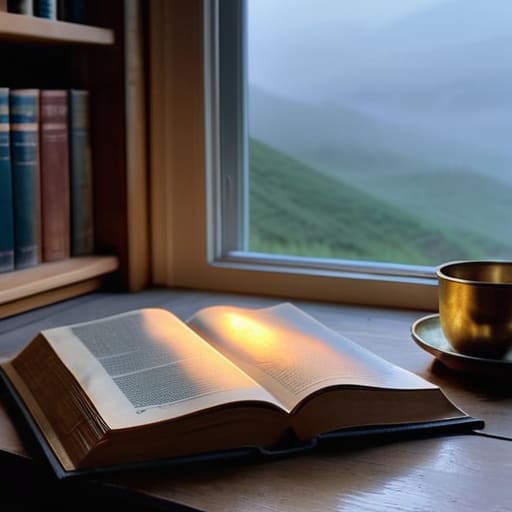
I’ve spent most of my life tucked away in quiet corners of archives, surrounded by the dust of centuries and the heavy silence of forgotten records. In our modern world, it feels as though we are constantly being pulled into a frantic, noisy current that leaves very little room for the self. We mistake being busy for being alive, forgetting that there is a profound, necessary grace in being alone. I have often found that the best way to navigate this restless age is to seek out novels about solitude—stories that don’t treat being alone as a problem to be solved, but as a sacred space to be explored.
In the following pages, I want to share five specific books that have sat with me long after the lamps were dimmed and the music faded. These aren’t just stories; they are companions for those evenings when you find yourself seeking a bit of stillness. I will guide you through a selection of works that capture the quiet dignity of the solitary life, helping you find beauty in the shadows and a sense of peace in your own company.
Table of Contents
- The Quiet Dignity of Virginia Woolf’s Waves
- A Study in Stillness with Kazuo Ishiguro
- The Lonesome Echoes of Cormac McCarthy
- Finding Solace in Henry David Thoreau
- The Melancholy Grace of Marilynne Robinson
- Finding the Quiet Between the Lines
- The Quiet Resonance of the Page
- The Quiet After the Final Note
- Frequently Asked Questions
The Quiet Dignity of Virginia Woolf’s Waves

There is a specific kind of rhythm to Woolf’s prose that reminds me of a late-night jazz session—unpredictable, flowing, and deeply introspective. In Waves, the solitude isn’t a void or a lack of company; rather, it is a vessel through which the characters explore the very texture of their consciousness. As I sit in my study with a glass of something amber, I find myself tracing the lines of their thoughts, realizing that being alone is often the only way to truly hear oneself.
A Study in Stillness with Kazuo Ishiguro

I remember picking up The Remains of the Day on a particularly grey afternoon, and the stillness of the setting struck a chord deep within me. Stevens, the butler, lives a life defined by a very specific, disciplined sort of isolation. His solitude is built into the very architecture of his existence, much like the stately, silent halls of the manor he serves. It is a heartbreakingly beautiful look at how we use our roles to shield ourselves from the messiness of human connection.
The Lonesome Echoes of Cormac McCarthy

Now, if you are looking for a solitude that feels more elemental—almost primal—then The Road is an experience you won’t soon forget. It is a stark, haunting journey through a world that has been stripped of everything but the barest essentials. There is no jazz here, no city lights, only the hollow wind and the heavy silence of a landscape that has forgotten the sound of a human voice.
Finding Solace in Henry David Thoreau
I have always felt a kinship with the spirit of Walden, even if my own version of “nature” usually involves a small corner of a public library. Thoreau wasn’t just running away from society; he was running toward a more intentional way of existing. His experiment in living simply and alone is a manifesto for anyone who feels the relentless pull of a world that moves far too fast.
The Melancholy Grace of Marilynne Robinson
In Gilead, the solitude feels less like a desert and more like a sanctuary. The narrative, written as a letter from an aging minister to his son, possesses a gentle, meditative quality that I find deeply comforting. It is a book about looking backward, not with bitterness, but with a quiet, scholarly appreciation for the life that has been lived.
Finding the Quiet Between the Lines
Solitude in a story isn’t about being lonely; it’s about the grace of finding oneself when the rest of the world finally stops shouting.
The best books don’t just tell us about being alone—they teach us how to sit comfortably in our own company, much like a slow jazz set on a rainy Tuesday.
When we slow down to inhabit these quiet characters, we start to notice the small, beautiful details of our own lives that we usually rush right past.
The Quiet Resonance of the Page
There is a profound difference between being lonely and being alone; a truly great novel doesn’t just describe solitude, it teaches you how to sit comfortably within it, turning a silent room into a space filled with echoes of everything that matters.
Petra Lindgren
The Quiet After the Final Note
Looking back through these pages, it is clear that solitude in literature is rarely about being lonely; rather, it is about the profound architecture of the self. Whether we are wandering through the sparse, haunting landscapes of a character’s internal world or sitting in the heavy silence of a room shared only with a book, these stories remind us that solitude is a craft. From the heavy, contemplative stillness found in these classics to the more modern, sharp-edged reflections on isolation, each novel offers a different way to sit with oneself. They serve as a sort of literary sanctuary, allowing us to explore the corners of our own minds that we often ignore in the rush of a busy afternoon.
As I close my notebook for the evening and prepare to turn out the lamp, I find myself thinking about how much we miss when we are always moving. We spend so much of our lives trying to fill every gap with noise, yet it is in the gaps that the real music happens. I hope these stories encourage you to embrace the silence just a little more deeply. Don’t be afraid of a quiet room or a long, solitary walk. After all, the most beautiful parts of our lives are often the ones we discover when we finally stop rushing and start noticing the details.
Frequently Asked Questions
Are there any particular books you'd suggest for someone who finds solitude more unsettling than peaceful?
I understand that feeling well. There is a fine line between a peaceful pause and a silence that feels a bit too heavy. If the stillness feels more like an ache than a rest, I might suggest something like The Remains of the Day. It’s a quiet book, certainly, but it explores the weight of what we leave unsaid. It offers a companionship in its melancholy that makes the solitude feel shared, rather than empty.
Do you think these stories are better read in complete silence, or do you have a specific kind of music to pair them with?
Silence is a powerful thing, certainly, but I’ve always found that total stillness can sometimes feel a bit too hollow. For me, it’s about creating a texture. I usually reach for something instrumental—perhaps a dusty Miles Davis record or some soft, melancholic cello. You want music that sits in the corners of the room without demanding center stage. It should feel like a companion to the prose, not a distraction from it.
How do you distinguish between a book that celebrates being alone and one that simply depicts loneliness?
It’s a fine line, isn’t it? To me, the difference lies in the texture of the prose. Loneliness feels hollow, like a room with the heat turned off—it’s a lack, a constant reaching for something that isn’t there. But a celebration of solitude? That feels intentional. It’s found in the way a character notices the slant of light across a wooden floor or the deliberate rhythm of their own thoughts. One is a void; the other is a sanctuary.
