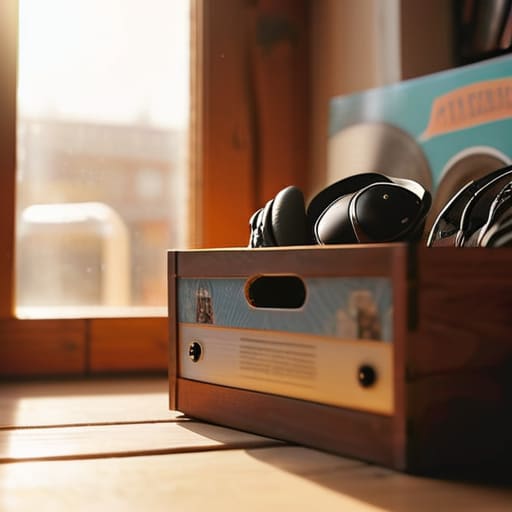
I remember sitting in the corner of a basement club in Chicago back in ’84, the air thick with the scent of old wood and spilled bourbon, waiting for a needle to find its groove. There was no algorithm to guide me then, just the unpredictable magic of a sleeve being pulled from a crate and the sudden, sharp realization that a new sound had just changed my life. Today, I see people scrolling through endless, sterile feeds, mistaking a high-speed data stream for true music discovery. We’ve traded the tactile thrill of the hunt for a digital convenience that feels remarkably hollow, leaving us with a thousand songs but hardly any connection to the ones that actually matter.
I’m not here to teach you how to optimize your data usage or manipulate a streaming service into feeding you more of the same. Instead, I want to show you how to reclaim the art of listening. I’ll share the quiet, intentional methods I use to find those rare melodies that refuse to leave your mind once the room goes dark. We are going to move past the noise and focus on the soul of the sound, finding the music that is actually worth your evening.
Table of Contents
Moving Past Streaming Service Recommendation Engines
It is far too easy to let an algorithm do the heavy lifting for us. We’ve become accustomed to the convenience of streaming service recommendation engines, letting a line of code decide what our ears should encounter next. But there is a certain sterility in that process. When you rely solely on audio preference modeling, you aren’t really discovering anything; you are simply being fed a mirror of what you already know. It’s a closed loop that lacks the friction necessary for true growth.
To find something that actually moves you, you have to embrace the messiness of human vs machine curation. I’ve always found that the best way to stumble upon a masterpiece is through the flawed, beautiful intuition of a person—a shopkeeper with dusty fingers, a radio DJ with a specific mood, or a friend who swears a certain record changed their life. There is a soul in those suggestions that a mathematical equation can’t replicate. If you want to move beyond the predictable, you must step away from the screen and seek out the unexpected in the places where people still share their passions by hand.
Finding Underground Music in the Quiet Moments
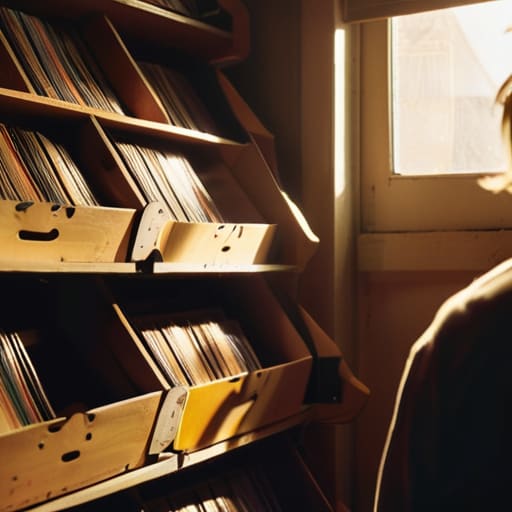
I’ve always found that the best way to stumble upon something truly special isn’t through a screen, but through the serendipity of a physical space. There is a specific kind of magic in the dust-mote-filled air of a basement record shop or the low hum of a corner café where a local musician is testing a new set. When you step away from the predictable patterns of audio preference modeling, you open yourself up to the delightful friction of the unknown. It’s in these quiet, unscripted moments that you find the artists who aren’t trying to fit into a demographic, but are simply trying to say something honest.
Instead of letting a computer predict your next move, I suggest leaning into the unpredictability of the hunt. Try wandering into a shop where the clerk looks like they haven’t seen sunlight in days; ask them what they’ve been spinning lately. That small, human exchange offers a depth of music genre exploration that no algorithm can replicate. It’s about the tactile joy of flipping through sleeves and the slow realization that a melody has finally found its way into your soul.
Five Ways to Let the Music Find You
- Follow the physical trail. Instead of clicking a profile, walk into a dusty corner of a local record shop and ask the clerk what they’ve been spinning lately. There is a certain magic in holding a sleeve in your hands that an algorithm can never replicate.
- Respect the deep cuts. When you find an album that speaks to you, resist the urge to skip to the hits. Sit there, perhaps with a drink and the lights turned low, and listen to the tracks that the artist intended to be the quiet connective tissue of the record.
- Seek out the communal hum. Go to a small, dimly lit venue where the acoustics are imperfect but the energy is real. There is a profound lesson in hearing how a song breathes in a room full of strangers, vibrating through the floorboards and into your chest.
- Trace the lineage. When a melody catches your ear, don’t just move on; look backward. Find out who influenced that musician, or who they influenced in turn. Music is a long, continuous conversation across decades, and you owe it to yourself to hear the whole dialogue.
- Practice the art of the intentional pause. Set aside an evening where the goal isn’t “content consumption,” but true listening. Put your phone in another room, grab your notebook, and let a single album settle into your bones without the distraction of a glowing screen.
The Art of Noticing
Put down the phone and stop letting an algorithm decide your mood; true connection to music requires the patience to sit with a single track until it actually says something to you.
Seek out the physical—the crackle of a worn record or the acoustics of a dimly lit room—because the texture of the environment is just as important as the melody itself.
Treat music discovery as a slow walk through a city rather than a sprint; the most meaningful sounds are often found in the quiet, unplanned corners of an evening.
## The Art of the Slow Listen
“We’ve traded the thrill of the hunt for the convenience of a scroll, forgetting that the best music isn’t something you find with a thumb—it’s something you stumble upon when you finally allow yourself to be still.”
Petra Lindgren
The Last Note Fades
At the end of the day, discovering music isn’t about how many tracks you can scan through in a single sitting or how efficiently an algorithm can predict your next mood. It is about the intentionality of the search—stepping away from the digital noise and leaning into the dusty corners of a record shop or the hushed atmosphere of a dimly lit club. We have discussed the need to move beyond the convenience of streaming engines and the importance of finding those hidden melodies in the quiet, unscripted moments of life. True discovery requires us to be present, to be patient, and to allow the music to actually find us when we stop rushing.
As I close my notebook tonight, I am reminded that the best songs are rarely the ones shouted at us through a screen. They are the ones that arrive softly, demanding nothing but our undivided attention. I hope you take a moment this week to put your phone in another room, dim the lights, and simply listen. Don’t just consume sound; let it settle into your bones and stay with you long after the silence returns. After all, a life well-lived is measured not by the volume of what we hear, but by the depth of the resonance that remains when the music finally stops.
Frequently Asked Questions
How do I begin to build a collection of music that actually feels personal rather than just following what's trending?
Start with the stories, not the charts. When you find a song that makes you pause, don’t just add it to a digital folder; look for the lineage. Find the artist’s influences, or the sleeve notes of a record that shares that same spirit. A collection shouldn’t be a list of hits, but a map of your own curiosities. Buy one physical thing that resonates, and let it become an anchor for your taste.
Are there specific ways to support local musicians without it feeling like a chore or a transaction?
It shouldn’t feel like a transaction; it should feel like a shared moment. Instead of just hitting “follow,” try showing up. Buy a drink at the venue, pick up a physical record if they have them, or simply sit in the front row and truly listen. When you give a musician your undivided attention, you’re giving them something more valuable than a digital click. You’re acknowledging that their art matters.
How can I train my ears to appreciate more complex or slower genres when I'm used to the constant pace of modern radio?
It’s a matter of recalibrating your internal clock. We’ve become accustomed to the frantic, bright pulse of modern radio, which rarely allows for silence. To adjust, stop treating music as background noise for your chores. Sit in a comfortable chair, perhaps with a glass of something amber, and let a single track play from start to finish without distraction. You have to teach your ears to wait for the resolution.
