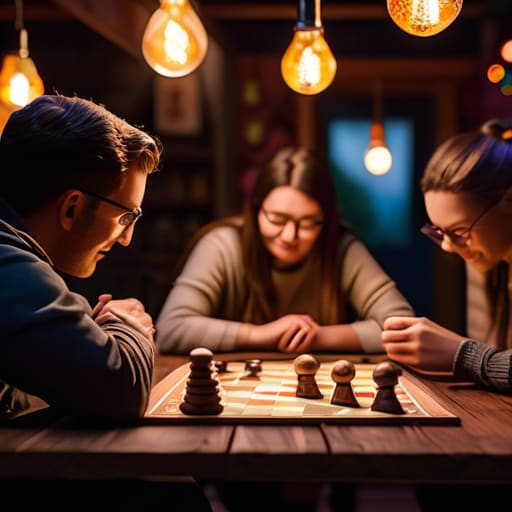
I remember sitting in a cramped, neon-lit corner of a downtown bistro last Tuesday, watching a group of youngsters struggle to navigate a digital menu while their eyes remained glued to their phones. It struck me then how much we have lost in our rush to be “efficient.” People often mistake the frantic energy of modern gaming lounges for true connection, but I’ve found that the best board game cafes aren’t about the loudest spectacle or the most expensive gadgets. They are about that quiet, tactile magic—the weight of a wooden token in your hand and the gentle friction of cardboard against a tabletop as a strategy slowly unfolds.
I’m not here to give you a list of trendy hotspots designed for social media photos. Instead, I want to guide you toward the spaces that respect the art of the pause. I will share my observations on finding those rare sanctuaries where the lighting is dim, the coffee is warm, and the games invite you to actually look at the person sitting across from you. Let’s move past the hype and discover how to find a real sense of belonging in these modern-day living rooms.
Table of Contents
Finding Sanctuary in Local Community Gaming Hubs
Finding Sanctuary in Local Community Gaming Hubs
I’ve always found that the most interesting stories aren’t found in books, but in the shared glances across a wooden table. When I wander into these community gaming hubs, I’m not looking for a loud, frenetic arcade atmosphere. Instead, I look for that specific, quiet gravity that pulls people together. There is a certain dignity in watching a group navigate a complex strategy game; you see the concentration, the shared laughter when a plan falls apart, and the slow building of a connection that feels far more substantial than a digital interaction.
Stepping into these spaces requires a certain grace, a bit of what some might call board game cafe etiquette. It’s about respecting the silence of a fellow player lost in thought while remaining open to the warmth of the room. I often find myself sitting in a corner, sketching the heavy molding of the ceiling, while the low murmur of the social gaming culture unfolds around me. It isn’t just about the games themselves, but about the rare, unhurried permission to simply be present with others in the dim light of a Tuesday evening.
Why Strategy Game Cafes Demand Our Full Attention
There is a particular kind of stillness that settles over a table when a complex game begins to unfold. Unlike the frantic, flickering stimulation of a smartphone, strategy game cafes demand a different sort of presence. You aren’t just passing time; you are engaging in a quiet, mental choreography. I’ve found that as the pieces move and the rules take hold, the outside world—the deadlines, the traffic, the digital noise—simply ceases to matter. It requires a deliberate focus that we rarely afford ourselves in our modern, hurried lives.
This immersion is what draws so many to the growing social gaming culture. When you are deep in a match, you aren’t just playing a game; you are participating in a shared ritual of intellect and patience. It’s a rare opportunity to practice the art of being truly present with others. In these spaces, the goal isn’t to rush toward a conclusion, but to savor the tension of a well-played move. To truly enjoy these best tabletop gaming venues, one must learn to embrace the slow burn of a long-form strategy, letting the complexity become a form of meditative calm.
A Few Notes on Navigating the Table
- Seek out the corners. When you arrive, don’t just settle for the first bright table near the door; look for the alcoves or the booths tucked away in the shadows where the light is a bit softer and the world feels a little more private.
- Embrace the learning curve. There is a certain quiet dignity in being a novice; don’t be afraid to ask the staff for a demonstration, and allow yourself the grace to make mistakes as you learn the rhythm of a new game.
- Let the phones rest. If you are there to connect with others or even just with the tactile weight of the pieces, keep your device in your pocket; the true magic happens in the spaces between the turns, not on a screen.
- Respect the tempo. Every cafe has its own heartbeat, from the lively chatter of a weekend crowd to the meditative silence of a Tuesday afternoon—try to find your rhythm within theirs rather than imposing your own.
- Savor the sensory details. Take a moment to notice the texture of the cards, the weight of the wooden dice, and the way the steam rises from your tea; these small, physical realities are what turn a simple game into a lasting memory.
The Quiet Lessons of the Tabletop
In a world that demands we constantly move faster, the deliberate pace of a well-played game serves as a necessary anchor, forcing us to trade digital noise for tangible, tactile connection.
There is a unique kind of intimacy found in shared strategy; when you sit across from someone, focused on a common goal or a playful rivalry, you are finally practicing the lost art of being truly present.
We must remember that the value of these spaces isn’t found in the complexity of the rules, but in the way they allow us to slow down, notice the small details, and find sanctuary in the hum of a shared evening.
The Architecture of Connection
“In an age where everything is designed to be swiped away in a second, there is a profound, quiet dignity in sitting across from another person, unfolding a map of cardboard and wooden tokens, and deciding to spend an entire evening simply being present in the same space.”
Petra Lindgren
The Last Move of the Evening
As I pack my notebook away and watch the light fade against the cafe’s window, I realize that these spaces offer much more than a mere distraction. We have explored how these hubs serve as vital sanctuaries for local connection and how the intricate mechanics of a strategy game demand a level of undivided presence that our modern, glowing screens so often rob us of. Whether it is the tactile satisfaction of moving a wooden piece across a board or the shared laughter over a misunderstood rule, these cafes provide a rare, structured way to engage with one another without the constant pull of the digital world. They are, in many ways, the modern equivalent of the old town squares I used to study in the archives—places where community is built through shared ritual.
Ultimately, my hope is that you find a corner in one of these establishments that feels like yours. Don’t just go for the games; go for the stillness that settles in when you finally stop rushing. Let the complexity of a new rulebook or the slow unfolding of a long-form campaign teach you the value of slowing down. In a world that feels increasingly fractured and hurried, there is a profound, quiet dignity in sitting across from a friend, focusing on a single task, and simply being present. Let us find the things that stay with us long after the cafe lights dim and the last dice have stopped rolling.
Frequently Asked Questions
How do I find a cafe that values a quiet, contemplative atmosphere over a loud, crowded party scene?
Look for the places that don’t lead with neon signs or thumping bass. I tend to seek out those tucked-away spots where the lighting is low and the tables are spaced just far enough apart to allow for a bit of privacy. Check their social media—if the photos show people huddled over intricate maps rather than cheering at a crowded bar, you’ve found your sanctuary. A quiet hum of focus is always better than a roar.
Is it possible to enjoy these spaces alone, perhaps just to observe the mechanics of a good game or enjoy the surroundings?
I often find that the best way to truly see a place is to sit in its quietest corner. There is no rule saying you must arrive with a troupe of friends. I’ve spent many evenings tucked into a corner booth with nothing but my notebook and a single, meditative game of solitaire or a complex puzzle. Sometimes, watching the ebb and flow of a room—the way a group reacts to a sudden turn of luck—is more rewarding than playing at all.
What should I look for in a cafe to ensure they respect the history and craftsmanship of the games they keep on their shelves?
Look for the signs of stewardship. A place that respects its collection won’t have battered, taped-up boxes shoved haphazardly onto sagging shelves. Instead, look for organized rows, well-maintained components, and perhaps a dedicated staff who can speak to a game’s lineage. It’s the difference between a warehouse and a library. When you see games treated with a certain quiet reverence—neatly sleeved or carefully sorted—you know the establishment values the craft as much as the play.
