
I remember sitting in a drafty basement archive back in the nineties, surrounded by nothing but the scent of decaying paper and the low hum of a radiator. I had just pulled a collection of field recordings from a dusty crate, and as the needle hit the wax, the raw, unpolished sound of traditional folk music filled the small space. It wasn’t the clean, autotuned perfection you hear on the radio today; it was something much more visceral. It felt like a direct line to a person who had lived, suffered, and breathed a hundred years before I was even a thought.
I’m not here to give you a dry lecture on musicology or a list of dates to memorize for a test. Instead, I want to share what these songs actually do to a person when you stop rushing and truly listen. I’ll guide you through the grit and the grace of the genre, helping you find the human heartbeat hidden within the melodies. We aren’t just looking for background noise here; we are looking for the songs that stay with you long after the lights go down.
Table of Contents
Indigenous Melodies and Rhythms That Stay With Us

When I sit in a quiet corner of a dim club, listening to the low hum of the city outside, I often find myself thinking about the songs that existed long before the electricity arrived. There is a profound weight to indigenous melodies and rhythms that don’t just entertain, but seem to pull at something ancient buried deep in our bones. These aren’t just tunes; they are the echoes of people who understood that storytelling through song was the only way to make the fleeting moments of life permanent.
I remember sketching the intricate woodwork of a small venue in the North, only to be interrupted by the sudden, haunting pull of a flute melody that felt like it was being exhaled by the building itself. It reminded me that much of our unplugged musical heritage survives not in textbooks, but in the breath and the hands of those who refuse to let the rhythm fade. There is a certain reverence required when these sounds fill a room—a necessity to put down the phone, stop the clock, and simply allow the history to settle around you like dust in a shaft of moonlight.
Unplugged Musical Heritage in a Rushing World

In my years spent tucked away in archives, I’ve noticed how we tend to treat history like something that belongs behind glass—static and untouchable. But when you sit in a dimly lit room and hear a single acoustic guitar or a hand-carved flute, you realize that unplugged musical heritage isn’t a relic; it’s a living, breathing pulse. In a world that feels increasingly digitized and frantic, there is a profound, almost defiant power in these unadorned sounds. They demand that we stop scrolling and start listening to the space between the notes.
There is a specific kind of magic in storytelling through song that a polished studio recording simply cannot replicate. It’s the slight crack in a singer’s voice or the rhythmic thrum of a wooden instrument that connects us to something primal. As we witness the constant evolution of folk genres, I find myself returning to these raw roots to find my bearings. We often forget that these melodies were once the only way a community held its memories together. To hear them now is to witness a quiet, beautiful resistance against the rush of the modern age.
How to Truly Listen: Finding the Heart Beneath the Strings
- Seek out the imperfections. In my years archiving old field recordings, I learned that the most beautiful moments aren’t the ones where the singer is pitch-perfect, but where you can hear the slight catch in their throat or the creak of a wooden chair. That’s where the humanity lives.
- Put the phone in your pocket and let the room settle. Folk music isn’t background noise for a scrolling thumb; it’s a conversation. If you’re at a local session, try to just sit with the silence between the songs before the next melody begins.
- Trace the lineage, not just the tune. When a melody strikes a chord in you, don’t just hum it—look into where it traveled. Understanding that a song migrated from a mountain valley to a coastal port adds a layer of weight to every note.
- Pay attention to the instruments, not just the sound. There is a tactile reality to folk—the way a hand moves over a lute or the specific resonance of a hand-carved fiddle. If you can, find a venue where you can actually see the craftsmanship of the tools being used.
- Listen for the stories being told, even if you don’t know the language. Even if the lyrics are foreign to your ears, the cadence of a lament or the driving rhythm of a dance tells a story of survival and joy that transcends words.
The Echoes We Carry Home
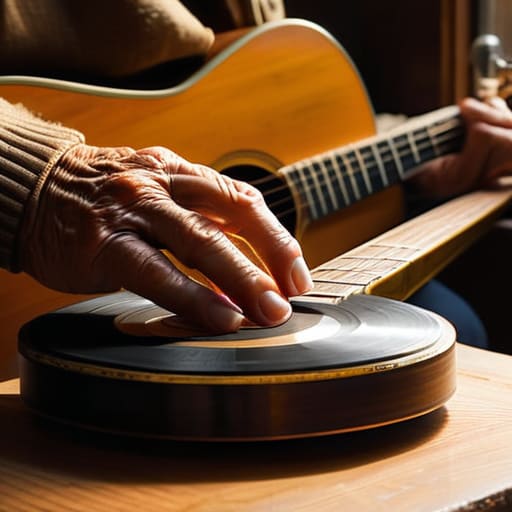
Traditional folk isn’t just a collection of old songs; it is a living, breathing map of where we have been and the hands that shaped us.
In an age of digital noise, the deliberate imperfection of an acoustic instrument serves as a necessary anchor for the soul.
To truly listen to folk music is to practice the art of presence, finding beauty in the slow, unhurried spaces between the notes.
The Echo in the Grain
“Traditional folk music isn’t just a collection of old songs; it’s the sound of a community breathing through the centuries, a way of holding onto the truth of who we were before the world got so loud and hurried.”
Petra Lindgren
The Echoes We Carry Home
As I sit here in the quiet of my study, the scratchy warmth of a worn record still humming in the background, I find myself thinking about how these melodies act as a thread through time. We’ve looked at how the deep, rhythmic pulse of indigenous songs keeps ancient spirits alive, and how the simple, unplugged nature of folk music offers a much-needed sanctuary from the relentless noise of our modern lives. These aren’t just songs; they are vessels of human memory, carrying the weight of our ancestors’ joys and sorrows directly into the present moment. To listen to folk music is to engage in a quiet act of preservation, ensuring that the raw, unvarnished truth of our shared history isn’t lost to the digital blur.
I often wonder if we realize how much we need these pauses. In a world that demands we move faster, produce more, and consume instantly, traditional folk music asks us to do the opposite: to sit still, to listen closely, and to let the notes settle in our bones. My advice to you is simple—don’t just hear the music, let it change your tempo. Find a small corner, dim the lights, and allow yourself to be truly present with a melody that has survived centuries. When the music finally fades, I hope you find that you aren’t just left with silence, but with a deeper sense of belonging to something much larger than yourself.
Frequently Asked Questions
How can we tell the difference between a song that is truly part of a culture's heritage and one that has been polished too much for modern ears?
It’s the friction that tells the story. When a song is polished for modern ears, the edges are sanded down; it becomes smooth, predictable, and perhaps a bit hollow. But true heritage? It carries a certain grit. You can hear it in the slight hesitation of a singer’s breath or a rhythm that doesn’t quite align with a metronome. If it feels a little uncomfortable, a little raw, or even a bit unpredictable, you’ve likely found the soul.
Is there a way to support these musical traditions without turning them into something commercial or losing their original soul?
It’s a delicate balance, isn’t it? To me, the answer lies in how we show up as listeners. We support these traditions best when we seek out the small, unpolished venues—the places where the music isn’t a product, but a conversation. Buy the record from the artist directly, sit in the front row, and listen with your eyes open. When we value the story behind the song more than the polish of the production, the soul stays intact.
Where can a person go to find these sounds today without them feeling like a museum exhibit?
You won’t find these sounds in a sterile gallery or behind a velvet rope. Instead, look for the dim corners of local listening rooms or small, independent folk festivals that prioritize the performer over the spectacle. Sometimes, it’s as simple as finding a neighborhood pub where a solo guitarist isn’t playing for a crowd, but for the room itself. Seek out the places where the music is allowed to breathe, uninterrupted and unpolished.
