
I remember sitting in a cramped, dimly lit basement archive in Ann Arbor, surrounded by the scent of decaying paper and old glue, when I first realized that most instructional manuals are utterly hollow. I’d spent weeks pouring over dense, academic texts, only to find they lacked the very thing a musician needs: breath. There is a pervasive, frustrating myth that you can master the art of the spontaneous through sheer mathematical rigor, but the truth is that most books on jazz improvisation focus far too much on the mechanics of the scale and not enough on the spirit of the conversation. They treat music like a filing system rather than a living, breathing entity.
I’m not here to sell you on a complex theory that will only leave you staring blankly at a staff of notes. Instead, I want to share a curated collection of works that actually understand the nuances of the craft—the ones that teach you how to listen as much as how to play. My goal is to guide you toward the few essential books on jazz improvisation that offer more than just fingerings; I want to help you find the texts that will stay with you long after you’ve closed the cover and picked up your instrument.
Table of Contents
Mastering Musical Expression Through Quiet Study
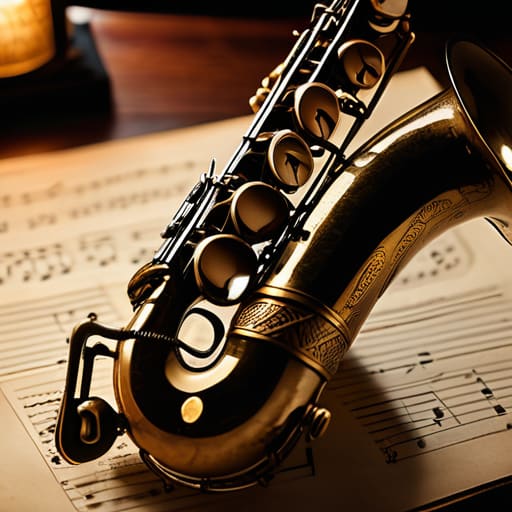
There is a specific kind of magic that happens when you sit with a text long after the city noise has died down. I’ve often found that the most profound breakthroughs don’t come from the frantic energy of a rehearsal room, but from the stillness of a study. When you dive into certain jazz harmony study guides, you aren’t just memorizing intervals; you are learning the secret language of tension and release. It is a slow, deliberate process, much like cataloging a delicate collection of manuscripts—one must respect the structure before they can truly appreciate the nuance.
I often tell my friends that true artistry requires a balance of instinct and intellect. To bridge that gap, I frequently return to various improvisation techniques for musicians that emphasize the “why” behind the note. It isn’t enough to simply run through scales; one must understand the emotional weight of a single, well-placed blue note. By engaging in these quiet hours of study, you aren’t just practicing—you are mastering musical expression in a way that allows your instrument to finally speak your truth.
Jazz Harmony Study Guides for Late Night Listening
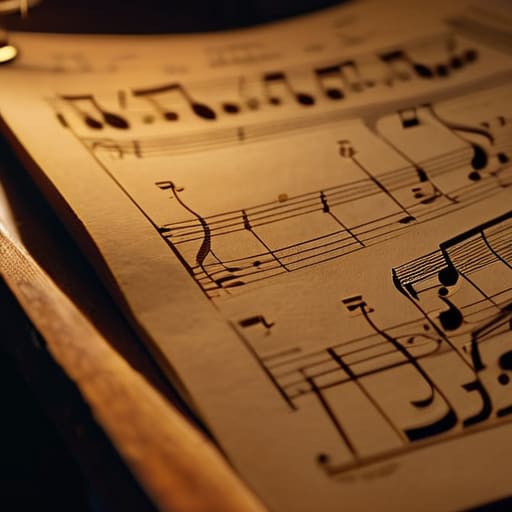
There is a particular kind of magic that happens when you sit with a score under a dim lamp, long after the city noise has settled. While many seek the thrill of the performance, I have always found that the true architecture of a song is revealed in the study of its foundation. I often find myself returning to certain jazz harmony study guides that treat the chord progression not as a set of rules, but as a map of emotional possibilities. These texts allow you to see the skeleton beneath the skin of a melody, helping you understand why a certain substitution feels like a sudden intake of breath.
If you are looking to deepen your own connection to the instrument, I suggest looking for resources that focus on learning jazz scales and modes through a lens of color rather than just mathematics. It isn’t enough to simply know the notes; you must understand how they breathe within the harmony. When I was working in the archives, I learned that the most enduring records were those that respected the structure while daring to wander. Using these guides to practice your jazz improvisation exercises in the quiet of your own home can turn a technical necessity into a deeply personal conversation with the music.
A Few Notes on How to Truly Read the Music
- Don’t treat these books like textbooks for a classroom; treat them like maps for a midnight stroll. You aren’t studying for a grade, you’re looking for a way to express what you feel when the room goes quiet.
- Keep a pencil—not just a pen—handy in your notebook. When a particular chord progression or a bit of theory catches your eye, sketch it out. There is something about the physical act of drawing a scale that helps it settle in your bones.
- Always pair your reading with a record spinning in the background. A book on improvisation is only half the story; you need to hear the breath and the grit of a real player to understand why those notes matter.
- Resist the urge to rush through the chapters. If a page on rhythmic displacement strikes a chord with you, stop there. Sit with it. Let the concept simmer while you sip your tea or a glass of something amber.
- Look for the “why” behind the “how.” A good book won’t just tell you which note to play next; it will try to explain the spirit behind the choice. Seek out the authors who write with a sense of wonder, not just a sense of instruction.
The Quiet Wisdom of the Page
Real mastery isn’t found in a frantic rush of scales, but in the slow, deliberate study of how a single note can change the mood of an entire room.
Use these texts not as rigid rulebooks, but as maps that allow you to wander more confidently through the beautiful unpredictability of a solo.
The best way to learn the language of jazz is to let the theory settle into your bones during those quiet, solitary hours when the rest of the world has finally gone still.
The Quiet Dialogue of the Page
“I’ve often found that the most profound improvisations aren’t born from technical mastery alone, but from a certain kind of listening—the kind you practice when you’re sitting still with a well-worn book, letting the ink teach your fingers the language of the unexpected.”
Petra Lindgren
The Final Note

As we close these pages, I hope you see that these books are more than mere technical manuals; they are maps to a much deeper territory. Whether you have been tracing the intricate geometry of jazz harmony or seeking to unlock the raw, spontaneous emotion of a solo, the goal remains the same. We aren’t just studying scales or rhythmic displacements; we are learning to listen to the silence between the notes. By combining the structured wisdom of these texts with the intuitive, late-night sessions we’ve discussed, you begin to bridge the gap between knowing the theory and actually feeling the music in your very bones.
In my years as an archivist, I learned that the most precious things are those that require time to truly understand. Improvisation is much the same. It cannot be rushed, and it certainly cannot be mastered in a single, frantic afternoon. So, I encourage you to take these books, find a comfortable chair, and perhaps a glass of something amber, and simply let the ideas breathe. Don’t worry about perfection; instead, focus on the beauty of the discovery. After all, the most profound melodies are often found when we finally stop trying to control the music and simply start to listen.
Frequently Asked Questions
Are these books better suited for someone who already understands music theory, or is there a way for a beginner to find beauty in them without getting lost in the technicalities?
It’s a fair question, and one I’ve often asked myself when staring at a complex score. While some texts certainly lean into the heavy mathematics of the genre, don’t let the notation intimidate you. You don’t need a degree to appreciate the intent behind the notes. Treat them less like textbooks and more like maps to a landscape. Even a beginner can find beauty by simply listening for the emotion the theory is trying to capture.
How do I balance the rigorous study of these texts with the need to simply sit back and let the music breathe?
It’s a delicate tension, isn’t it? I often find myself staring at a complex chord progression in a text, my mind racing to deconstruct it, only to realize I’ve stopped actually hearing the music. My rule is simple: study in the afternoon, but listen in the evening. Treat the books like a map, but remember that the map is not the journey itself. Put the notebook away, dim the lights, and let the notes exist without your permission.
Can a book truly capture the spontaneous spirit of a live performance, or are they merely maps to a territory that can only be felt?
It’s a fair question, and one I’ve pondered while sitting in dimly lit corners of the Blue Note. A book can’t replicate the sweat or the sudden, electric tension of a drummer finding a new pocket. No, they are maps. But even the most seasoned traveler needs a map to understand the terrain. These pages don’t replace the feeling; they give you the language to describe the magic once the music stops.
