
I remember sitting in a dimly lit basement club in Detroit years ago, the air thick with the scent of old velvet and ozone, listening to a set that felt less like a performance and more like a conversation. There was no flashing light show or thousand-dollar synthesizer setup; there was just a rhythm that seemed to breathe alongside the crowd. Lately, when I look at how people approach electronic music production, I see so much noise and so little soul. Everyone is obsessed with the latest plugin or the most expensive piece of hardware, chasing a digital perfection that feels entirely hollow. They’ve forgotten that the most profound sounds often come from the spaces between the notes, not from the complexity of the software.
I’m not here to sell you on a dream of instant stardom or a list of gear you don’t need. Instead, I want to talk about the quiet, intentional craft of building a sound that actually lingers in the mind long after the speakers go silent. We are going to strip away the technical jargon and focus on the emotional architecture of your tracks. My promise is simple: I will share the lessons I’ve learned from a lifetime of listening, helping you find the humanity hidden within your electronic music production.
Table of Contents
The Slow Dance of Sound Design Fundamentals
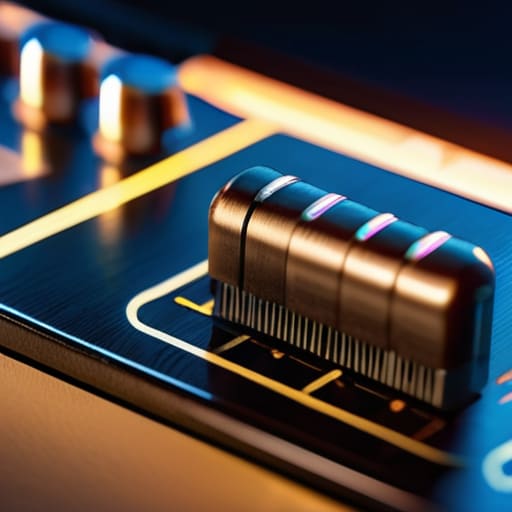
When I first began looking into how these modern sounds are constructed, I found myself drawn back to the same principle I applied to my old archives: everything has a lineage. In the realm of sound design fundamentals, there is a profound tension between the warmth of the past and the precision of the present. I often find myself pondering the debate of analog vs digital synthesis; while a computer offers infinite possibilities, there is a certain unpredictable soul found in the slight imperfections of a voltage-controlled oscillator that a perfect algorithm often struggles to replicate.
It isn’t about having the most expensive gear or the most complex software. It is about the intention behind the noise. When you sit down at your desk, don’t feel pressured to build a wall of sound immediately. Instead, focus on the texture of a single note. Whether you are working through your MIDI sequencing basics or layering a subtle pad, treat every frequency like a brushstroke on a canvas. If you rush the foundation, the entire structure will feel hollow once the lights come up.
Choosing Your Space the Digital Audio Workstation Setup
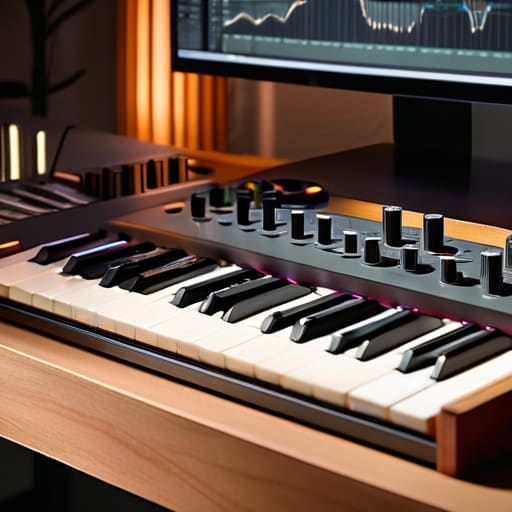
I’ve spent a lifetime surrounded by the physical weight of history—the smell of old parchment and the heavy click of filing cabinets. Transitioning into the world of electronic music felt, at first, like losing that tactile connection. When you begin building your digital audio workstation setup, there is a temptation to clutter your screen with endless plugins and flashing lights, chasing a sense of infinite possibility. But I’ve learned that a workspace should be more like a well-curated library than a chaotic warehouse. You need a place that invites you to sit, rather than one that demands you rush.
I often find myself sketching the layout of my desk in my notebook, trying to find a balance between utility and peace. It isn’t just about having the fastest processor; it’s about how your music production workflow feels when the sun goes down. If your interface is too cluttered, your mind will follow suit. I prefer a lean arrangement—enough tools to express a thought, but not so many that the soul of the melody gets lost in the machinery. A thoughtful space allows you to focus on the nuance, ensuring that your environment supports the quiet work of creation.
Five Ways to Keep the Soul in Your Machine
- Don’t get lost in the infinite menus of a plugin; sometimes the most honest sound comes from a single, well-placed oscillator that you’ve spent twenty minutes actually listening to.
- Treat your silence with as much respect as your melodies, because a track needs room to breathe, much like a quiet corner in a crowded jazz cellar.
- Resist the urge to automate everything to death; a little bit of human imperfection—a slight drift in pitch or a rhythmic hesitation—is often where the magic hides.
- Stop chasing the loudest frequency in the room and start looking for the texture that makes your skin prickle, even if it’s tucked away in the mid-range.
- Step away from the glowing screen once in a while to let the ideas settle in your mind, because the best compositions usually arrive when you aren’t staring directly at them.
Notes for the Long Night Ahead
Don’t let the infinite possibilities of your software turn into a frantic race; true texture is found when you stop clicking and start listening to how a sound breathes.
Your workspace should be a sanctuary, not a laboratory, where the tools you choose serve your intuition rather than complicating your creative peace.
The most enduring tracks aren’t built on technical perfection, but on those small, intentional imperfections that give a piece of music its human pulse.
## The Ghost in the Machine
“We often get so caught up in the clinical precision of the software, chasing a perfect frequency or a sterile loop, that we forget the most important part: the friction. Real music isn’t found in a mathematical perfection; it’s found in that slight, imperfect wobble of a synth or a texture that feels almost like a memory. Don’t just build a track—try to capture a feeling that lingers long after you’ve closed the laptop.”
Petra Lindgren
The Resonance of the Finished Work
As you move from the initial spark of an idea to the final polish, remember that the tools are merely extensions of your intent. We have wandered through the intricacies of sound design and the quiet architecture of the digital workstation, but the true craft lies in how you marry the two. It is easy to get lost in the endless scrolling of plugin menus or the pursuit of a mathematically perfect frequency. However, the most enduring tracks aren’t built on technical perfection alone; they are born when you learn to balance the precision of the software with the warmth of your own intuition. Don’t let the gear overshadow the melody, and never forget that the most important element in your signal chain is your own perspective.
In the end, electronic music production is less about conquering technology and more about learning to listen. I often think back to the old jazz clubs I used to visit—the magic wasn’t in the expensive microphones, but in the way the room breathed with the performers. Your music should do the same. As you close your laptop and step away from the glow of the screen, I hope you find the courage to leave in those small, human imperfections that make a sound feel alive. Stop chasing the sterile ideal and start chasing the feeling that stays with you long after the silence returns. That is where the true soul of your music resides.
Frequently Asked Questions
How do I stop getting lost in the endless menus of my software and actually start making something that feels human?
I’ve spent my life staring at dusty ledgers, and I know how easy it is to lose the forest for the trees. When the menus start feeling like a labyrinth, close the lid for a moment. Pick one single sound—a hum, a pluck, a breath—and stay with it. Don’t hunt for perfection in a list; hunt for a feeling. Limit your choices. Sometimes, the most human music comes from the constraints we set for ourselves.
Is there a way to add a bit of warmth and grit to digital sounds so they don't feel so cold and sterile?
The problem with digital precision is that it lacks the fingerprints of a human hand. To find that warmth, you have to embrace a little imperfection. I often find that running a clean signal through a bit of tape saturation or a subtle tube emulation plugin does wonders. It’s like the difference between a high-res photograph and a weathered polaroid; you need those tiny, unpredictable textures to make the listener actually feel the room.
When does a track actually feel finished, or am I just chasing a perfection that doesn't exist?
The truth is, a track is never truly finished; it is simply abandoned. I spent years cataloging archives, and I learned that every record has its limits. If you find yourself tweaking a snare hit for three hours, you aren’t composing anymore—you’re just stalling. A song is done when it finally breathes on its own, when it captures a feeling that no amount of technical polishing can improve. Let it go.
