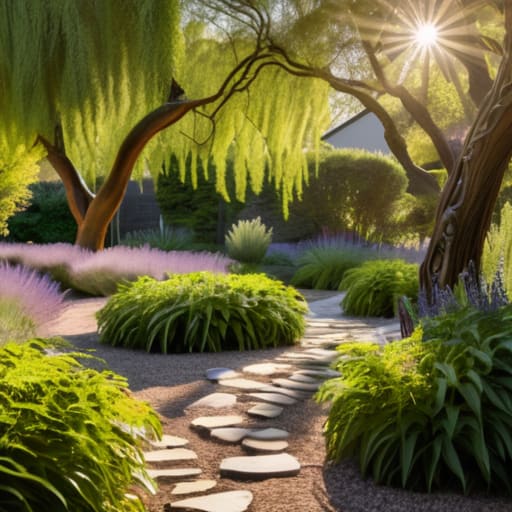
I remember standing in the middle of a sprawling estate last autumn, clutching my notebook, feeling nothing but a profound sense of exhaustion. I had just finished one of those rigid, choreographed sculpture garden tours where a guide marches a group along a predetermined path, reciting dates and marble types like they were reading a grocery list. There was no room to breathe, no space to actually see the way the light hit the bronze, and certainly no time to sit quietly with a thought. Most people treat these outings like a checklist to be completed, rushing from one pedestal to the next as if they’re racing against a clock that doesn’t exist.
I’m not interested in helping you check boxes or memorize a syllabus. My goal is to show you how to reclaim your time and find the quiet rhythm hidden within these spaces. I want to share how you can approach sculpture garden tours as a way to actually engage with the world, rather than just passing through it. We’ll focus on finding the pockets of stillness where the art and the landscape truly meet, ensuring that when you finally leave, you carry something meaningful back home with you.
Table of Contents
Seeking Stillness Through Curated Garden Exhibitions
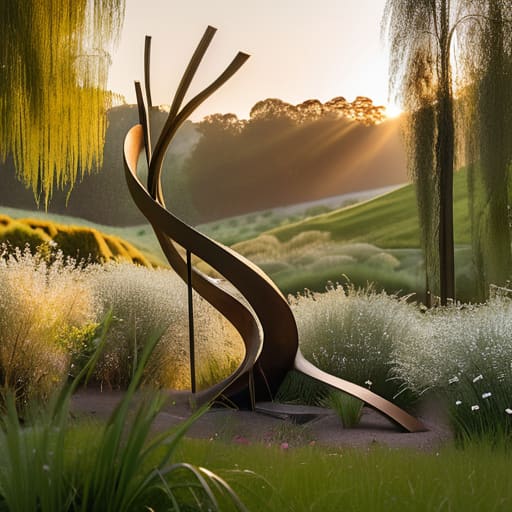
There is a particular kind of magic that happens when a piece of fine art in nature isn’t fighting for your attention under a harsh spotlight. In a gallery, you are often aware of the walls, the hushed breathing of strangers, and the pressure to “understand” the work. But when you encounter curated garden exhibitions, the dialogue changes. The art has to contend with the shifting sun, the sway of the willow trees, and the way the dew clings to bronze in the early morning. I find myself leaning into these moments, letting the scale of a massive installation settle against the softness of the landscape.
When I embark on sculpture park walking tours, I’m not looking for a checklist of names or dates. I’m looking for that rare, quiet friction between man-made form and the wildness of the earth. It’s about how a jagged granite edge might look against a bed of ferns, or how a polished steel surface reflects the passing clouds. These outdoor art installations aren’t just objects to be viewed; they are anchors that allow us to finally stop our restless pacing and simply exist within the scenery.
Tracing the Lines of Fine Art in Nature
There is a particular kind of magic that happens when the rigid geometry of a bronze figure meets the soft, unscripted chaos of a willow tree. As I wander through these spaces, I find myself less interested in the plaque at the base of a pedestal and more captivated by how the light catches a curve just as the sun begins to dip. When we engage with fine art in nature, we aren’t just looking at objects; we are witnessing a conversation between the maker’s intent and the earth’s persistence.
I often find my notebook out, sketching how a heavy granite piece seems to settle into the soil, almost as if it has been there for centuries rather than weeks. These outdoor art installations demand a different kind of attention than a gallery wall does. In a museum, the silence is heavy and enforced, but here, the wind and the rustle of leaves provide a living soundtrack. It reminds me that art shouldn’t just be observed—it should be felt in the context of the living world, breathing alongside us in the quiet afternoon air.
How to Truly See the Art Between the Leaves
- Leave your itinerary at the gate. I’ve learned through decades of cataloging that the best way to experience a garden isn’t by checking off a list of names, but by letting a single piece of bronze or stone pull you toward it until you have no choice but to stay a while.
- Watch the light, not just the sculpture. A marble figure looks entirely different under the harsh glare of noon than it does when the sun begins to dip and the shadows stretch long and thin across the grass; wait for those shifting moments.
- Bring a small notebook, even if you don’t intend to draw. Sometimes, just the act of sitting on a bench and sketching the way a curve of stone meets a willow branch forces you to slow your breathing and actually notice the composition.
- Listen to the silence between the sounds. A sculpture garden isn’t just a visual feast; it’s an acoustic one. Pay attention to how the wind moves through the trees around a piece, or how the sound of your own footsteps changes when you move from gravel to soft earth.
- Avoid the midday rush at all costs. If you want to find the soul of a collection, visit when the crowds have thinned or before they arrive. There is a profound, almost sacred intimacy in being alone with a masterpiece in the quiet of the morning.
The Quiet Lessons of the Garden
Let the art breathe; don’t treat a stroll through the grounds like a checklist to be completed, but rather a conversation between the stone and the sky.
Look for the friction where the man-made meets the organic, noticing how a sharp bronze edge softens against the moss or how a shadow falls across a marble curve at dusk.
Carry nothing but your own curiosity, and if you find yourself moved by a particular silhouette, allow yourself the luxury of sitting still until the feeling passes.
The Art of the Lingering Glance
A sculpture garden isn’t a checklist of names and dates to be ticked off in a hurry; it is a conversation between the weight of the bronze and the lightness of the afternoon breeze. If you aren’t willing to sit for a moment and let the shadows of the stone settle, you haven’t truly seen it at all.
Petra Lindgren
The Lasting Impression
As you prepare to leave the garden, I hope you carry more than just a few photographs in your mind. We have wandered through the intentional stillness of curated exhibitions and traced how the sharp edges of fine art can soften when met by the organic curves of a willow tree or a patch of moss. These tours are more than mere walks; they are an exercise in noticing the dialogue between the creator’s hand and the earth’s patient growth. Whether it was a towering bronze figure or a delicate stone carving tucked away in a shaded corner, the goal was never to check a list, but to find those quiet intersections where art and nature finally stop arguing and start breathing together.
When the sun begins to dip and the shadows of the sculptures stretch long across the grass, remember that the true value of these moments isn’t found in the speed of your stroll. In a world that demands we constantly look toward the next thing, there is a profound, quiet rebellion in simply standing still. Don’t rush back to the noise of the city just yet. Instead, let the weight of what you’ve seen settle into your bones. I’ve found that the most beautiful things are those that stay with us long after we’ve stepped back through the gates, lingering like the faint, soulful notes of a jazz melody in a dim room.
Frequently Asked Questions
Is there a particular time of day when the light hits the sculptures in a way that truly brings the garden to life?
If you’re looking for that particular magic, aim for the “golden hour”—that soft, honeyed stretch just before the sun dips below the horizon. I’ve found that when the light hits at a low angle, it doesn’t just illuminate the stone; it creates long, dramatic shadows that give the pieces a sense of movement. It turns a static garden into something breathing and alive. Don’t rush it; just sit and watch the light shift.
Do these tours allow for enough quiet space to actually sit and reflect, or are they more of a structured march from one piece to the next?
I’ve found that it depends entirely on the guide, but I always aim for the quieter corners. While some tours can feel a bit like a choreographed march, the best ones respect the silence. I usually wait for the group to move on, then find a weathered bench near a bronze figure. If you wander just a few paces off the main path, you’ll find the stillness you’re looking for.
How much of the history behind these installations is shared—do we learn about the artists themselves, or just the technicalities of the work?
It varies, much like the archives I used to tend. Some tours lean heavily into the technical—the weight of the bronze or the way the granite was quarried—which can feel a bit clinical. But the best ones? They breathe life into the creator. They tell you about the artist’s hands, their struggles, and why they chose that specific patch of earth. I prefer the latter; I want to meet the soul behind the stone.
