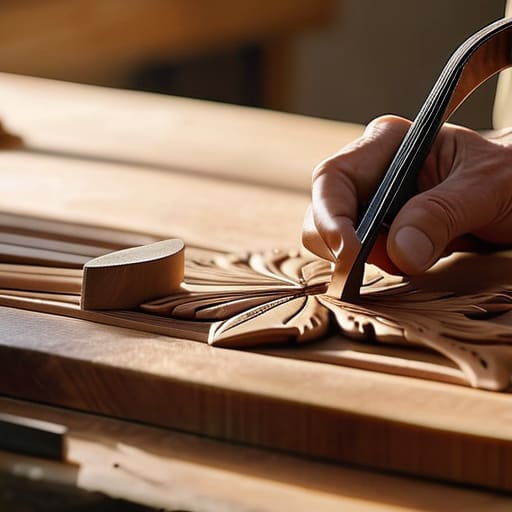
I remember sitting in a cramped, dust-moted workshop in Ann Arbor back in the late seventies, watching an old luthier work. He wasn’t using any of the high-tech sensors or computerized precision tools you see advertised today; he was simply listening to the grain of the spruce. Most people think instrument making is a pursuit of mathematical perfection or a race to own the most expensive specialized machinery, but they couldn’t be more wrong. That’s just noise. Real craftsmanship isn’t about the gear you buy; it’s about that heavy, expectant silence in the room right before you strike a chord on something you’ve built with your own two hands.
I’m not here to sell you a dream of instant mastery or a list of overpriced gadgets that will only clutter your workbench. Instead, I want to talk about the tactile, slow reality of the craft. I’m going to share what I’ve learned about the patience required to truly understand how wood and tension interact. We are going to focus on the soul of the process—the parts that actually matter when the sun goes down and the music begins.
Table of Contents
The Tonewood Selection Process Listening Before the First Cut
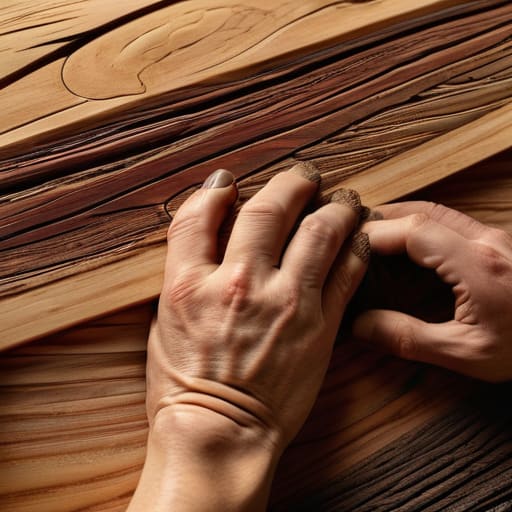
I’ve always believed that you can tell a lot about a person by how they treat a piece of raw material. In my years among the archives, I saw how paper ages, but there is something far more visceral about the way a slab of spruce or mahogany holds its breath. When it comes to the tonewood selection process, a true maker doesn’t just look at the grain with a practiced eye; they listen with their hands. You have to feel for that specific, elusive vibration that tells you the wood is ready to speak.
It is a slow, almost meditative ritual. Before a single saw touches the bench, there is a period of quiet observation, studying the density and the way the light catches the fibers. Many modern workshops rush this stage, but the real lutherie techniques and traditions demand patience. You aren’t just choosing timber; you are selecting the very lungs of the piece. If the wood doesn’t possess that inherent, sleeping energy, no amount of precision woodworking will ever coax a soul out of the final shape. It’s about finding the wood that understands the silence.
Soundboard Resonance Principles Capturing the Ghost in the Grain
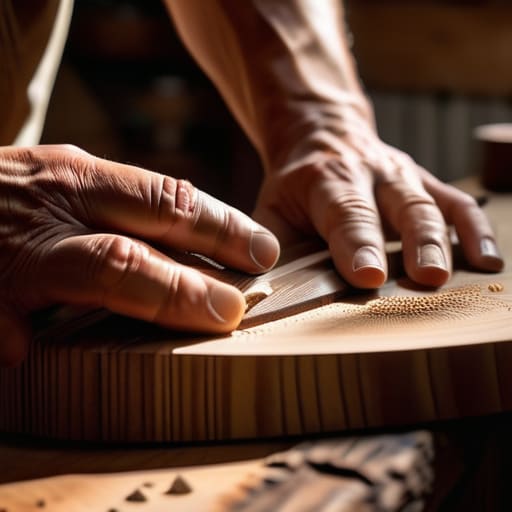
Once the wood is chosen, the real conversation begins with the soundboard. It isn’t enough to simply plane a surface flat; you are essentially trying to shape a lung. In the world of lutherie techniques and traditions, the soundboard is the heart of the machine, the thin membrane that breathes life into the strings. I often find myself sitting in silence in my workshop, tapping a graduated piece of spruce, listening for that specific, hollow ring that tells me the grain is ready to sing.
To master soundboard resonance principles, one must learn to respect the tension between strength and fragility. If the plate is too thick, the instrument will be stubborn and mute; too thin, and it will collapse under its own voice. It is a delicate dance of precision woodworking for musicians, where you aren’t just removing material, but rather unearthing a frequency that was already sleeping inside the fibers. You are looking for that elusive “ghost”—the way a note lingers in the air, vibrating long after the initial strike has faded into the shadows of the room.
The Quiet Discipline: Five Lessons from the Workbench
- Respect the grain’s memory. When you’re working with aged spruce or maple, remember you aren’t just shaping wood; you’re negotiating with decades of growth. Don’t force a curve that the fibers aren’t ready to give; listen to the resistance under your plane.
- The importance of the “unseen” finish. It’s tempting to rush toward a high-gloss shine that catches the eye, but a true instrument needs to breathe. I’ve always found that a thin, hand-rubbed oil finish honors the wood’s character far better than a thick, plastic shroud ever could.
- Precision in the small, silent spaces. Much of an instrument’s soul lives in the joints and the bracing—the parts no one will ever see once the lacquer sets. If the internal architecture is rushed, the music will always feel hollow, no matter how beautiful the exterior looks.
- Patience with the drying time. In our modern world, we want everything instantly, but wood cannot be hurried. If you try to bend a piece before it has truly settled into its new shape, you’re building a flaw into its very foundation. Let the humidity and the hours do their work.
- Tuning the tool to the task. A sharp chisel is a necessity, but a steady hand is a requirement. I often find that the best work happens when you stop thinking about the finished product and start focusing entirely on the tactile sensation of the metal meeting the grain.
The Essence of the Craft
True craftsmanship begins long before a tool touches the wood; it starts with a quiet, patient listening to what the material is trying to tell you.
A great instrument isn’t just a feat of engineering, but a vessel designed to hold the resonance and the very soul of the person playing it.
To build something that lasts, one must respect the slow, intentional details that most people are too hurried to ever notice.
The Breath Between the Notes
Making an instrument isn’t about conquering the material; it’s a conversation with it. You aren’t just shaping wood and wire—you are building a vessel for a ghost, carving out a space where a musician can finally let a feeling breathe.
Petra Lindgren
The Echo That Remains
As I sit here in the dim light of my study, looking over my notes on the resonance of spruce and the careful selection of hardwoods, I am reminded that instrument making is never truly finished. It is a delicate dialogue between the maker and the material, a process that begins with the patient ear and ends with a physical object that breathes. We have discussed how the grain of the wood dictates the spirit of the sound and how the soundboard acts as the very lungs of the instrument. To rush these stages is to miss the point entirely; you cannot force a melody out of wood that hasn’t been given the time to speak its own truth through the carving and the bracing.
Ultimately, the luthier is not just building a tool for music, but a vessel for human emotion. When the workshop lights are finally extinguished and the sawdust has settled, what remains is something far more profound than mere craftsmanship. We create these objects so that, decades from now, someone else might sit in a quiet room and feel the same shiver of connection that we felt while shaping the wood. I hope you find yourself slowing down enough to appreciate that quiet magic. After all, the most beautiful things in this life are rarely the ones that are built in a hurry, but those that are crafted with intention.
Frequently Asked Questions
How does a maker decide when a piece of wood has finally "spoken" enough to be used?
It isn’t a calculation; it’s a conversation. I’ve sat in workshops where the air is thick with sawdust, watching a maker tap a spruce plank. They aren’t just checking for density; they’re listening for a certain clarity, a way the vibration settles in the palm of the hand. You know it’s ready when the wood stops feeling like an object and starts feeling like a promise—a quiet readiness to hold a note.
Is there a specific way to preserve the history of an instrument's origin within its design?
I’ve always felt that an instrument shouldn’t just play music; it should tell its own story. Some makers etch subtle provenance marks inside the soundhole, or perhaps they use a specific local wood that anchors the piece to a certain landscape. To me, the truest preservation lies in the intentionality of the build—those small, idiosyncratic choices that act like a thumbprint, ensuring the instrument carries the weight of its origins long after the maker is gone.
Can the subtle imperfections in the grain actually contribute to a more soulful sound?
I’ve often found that perfection is a bit of a lie, isn’t it? In the archives, we see it in old letters—the ink blot or the slight tremor in a hand. In instrument making, those “imperfections” are where the character lives. A perfectly uniform grain can be sterile, almost clinical. It’s those subtle irregularities that break up the sound waves in ways a machine can’t predict, giving the music a warmth, a certain human ache.
