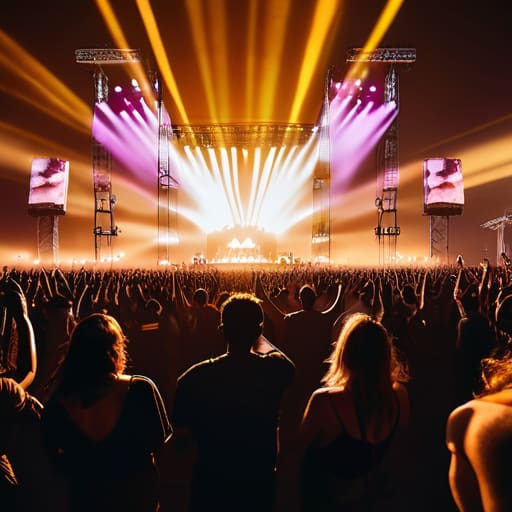
I remember standing at the edge of a dusty field last summer, watching a sea of people sprint from one massive stage to another, eyes glued to their phones as if they were afraid to miss a single second of the digital broadcast. It struck me then that we’ve turned music festivals into these frantic, expensive marathons of consumption rather than what they were meant to be: moments of shared resonance. We spend hundreds of dollars to stand in line, fight through crowds, and rush through setlists, all while missing the actual soul of the performance because we’re too busy documenting it for people who aren’t even there.
I have no interest in telling you which VIP tent has the shortest line or which influencer is headlining this year. Instead, I want to help you rediscover the art of the slow listen. In the pages ahead, I’ll share my own observations on how to navigate these sprawling events without losing your sense of peace. We’re going to focus on finding those quiet pockets of magic—the way the light hits the stage during a transition, or the way a single melody can anchor you to the earth—so that when the music finally stops, you actually have something worth remembering.
Table of Contents
Finding Stillness Through Smart Festival Ticket Booking Tips
There is a certain frantic energy that settles over a crowd when the ticket queues open, a digital scramble that feels entirely at odds with the very soul of the music we seek. I’ve found that the best way to preserve your peace is to treat your live music event planning like the careful curation of an archive. Instead of letting the chaos dictate your mood, approach the process with intention. Set aside a quiet hour, perhaps with a cup of tea, to map out your intentions before you ever hit that “buy” button. When you secure your entry with a calm mind, you’ve already won half the battle against the weekend’s inevitable frenzy.
Once the logistics are settled, the real magic lies in what you bring along to anchor yourself. I often tell friends that a successful outing isn’t about having the most gear, but about having the right tools to remain present. I keep a small mental music festival survival guide that prioritizes comfort over spectacle—a sturdy chair, a reliable light, and perhaps a way to capture a quick sketch of the stage. By handling the practicalities early, you ensure that when the first note finally rings out, you aren’t worrying about your footing, but rather, listening to the resonance.
A Music Festival Survival Guide for the Soul
When we prepare for the summer music festival season, we often focus too much on the logistics and not enough on our internal rhythm. We treat it like a military operation rather than a pilgrimage. A true music festival survival guide isn’t just about having a portable charger or enough water; it’s about protecting your capacity to actually feel the music. If you spend the entire weekend worrying about your tent or your schedule, you’ll miss the way the light hits the stage during that one perfect, melancholic set.
I’ve learned that the secret to longevity in these crowded spaces is intentionality. While checking off your festival camping gear checklist is practical, don’t forget to pack a few things for your spirit—perhaps a worn paperback or a quiet corner to sit in when the bass becomes too heavy. Treat your outdoor concert essentials as tools for comfort, not just survival. If you are physically at ease, your mind is free to wander through the melodies, allowing the experience to settle into your bones rather than just passing through your ears.
The Art of Presence: Five Ways to Truly Experience the Festival
- Leave the phone in your pocket for a while. I know the urge to capture every fleeting moment is strong, but there is a certain magic that only happens when you watch a performance through your own eyes rather than a five-inch screen. Let the memory settle in your mind, not just your cloud storage.
- Seek out the periphery. The center of the crowd is often a chaotic rush of elbows and noise, but if you drift toward the edges or find a patch of grass further back, you’ll find the space to actually breathe and hear the nuances of the instruments.
- Honor the transition periods. The time between sets isn’t just “waiting”; it’s a chance to sit with a friend, watch the sunset change the color of the stage, or simply listen to the ambient hum of the crowd. These quiet interludes are often where the best conversations happen.
- Dress for the evening, not just the heat. Festivals are marathons, not sprints. Bring that one reliable, heavy layer—a well-worn denim jacket or a soft wool scarf—so that when the temperature drops and the music turns soulful, you aren’t shivering your way through the headliner.
- Find your own rhythm of rest. You don’t have to be on your feet from noon until midnight to be “doing it right.” Find a quiet corner, perhaps a shaded spot away from the main speakers, and allow yourself twenty minutes of stillness. You’ll find you appreciate the music much more when you aren’t fighting exhaustion.
The Essence of the Experience
Resist the urge to chase every single set on the lineup; it is better to truly hear one artist than to catch fragments of ten.
Carry a small notebook to jot down a melody or a fleeting feeling, capturing the evening before it dissolves into memory.
Prioritize the quiet spaces between the stages, for it is in the pauses that the music truly begins to settle in your bones.
The Rhythm of the Crowd
We often mistake the roar of a festival for the music itself, but the true magic happens in the quiet spaces between the sets—when the dust settles, the lights dim, and you realize you aren’t just watching a performance, you are breathing in sync with a thousand strangers.
Petra Lindgren
The Echo in the Silence
As the dust settles on the festival grounds and the heavy crates of equipment are packed away, I find myself reflecting on what we actually gathered during those long, sun-drenched days. We discussed the logistics of booking early to preserve our peace, and we looked at how to protect our spirit from the sheer exhaustion of the crowd. But more than that, we talked about the importance of intentional presence. Whether you are navigating the chaos of a main stage or finding a quiet corner behind a vendor’s tent, remember that the goal isn’t to see every single act on the lineup; it is to ensure that you don’t miss the quiet magic that happens in the spaces between the songs.
When you finally return to the quiet of your own home, don’t let the experience vanish like a fading radio signal. Carry the warmth of those melodies with you, and let them remind you that life is meant to be felt, not just scheduled. A music festival shouldn’t just be another item checked off a bucket list; it should be a way to recalibrate your senses. I hope you find the courage to slow your pace amidst the roar of the crowd, and that you leave the festival not just tired, but profoundly moved. After all, the best music is the kind that stays in your bones long after the final encore has ended.
Frequently Asked Questions
How can I find those smaller, more intimate stages where the music actually feels personal rather than just part of the noise?
Don’t let the main stage’s roar dictate your evening. I’ve found that the real magic usually hides in the periphery. Look for the stages tucked behind the food stalls or nestled in those quiet, shadowed corners of the grounds. Often, the smaller setups lack the massive LED screens, but they offer something better: a chance to actually see the sweat on a musician’s brow and feel the vibration of a single cello. Follow the smaller crowds; they’re usually looking for the same thing you are.
Is it possible to truly enjoy a large-scale festival without feeling like I'm constantly rushing from one thing to the next?
It’s a common trap, isn’t it? We treat these festivals like checklists rather than experiences. If you want to actually feel the music, you have to give yourself permission to miss things. Pick one or two performances that truly matter to you, and let the rest go. Sit on the grass, watch the shadows stretch across the field, and let the atmosphere settle. A festival shouldn’t be a race; it should be a slow exhale.
What are some ways to preserve the memory of a performance beyond just a blurry photo on a phone?
I’ve always found that a digital screen is a poor substitute for a lived moment. Instead of squinting through a lens, try carrying a small notebook, much like I do. Sketch the curve of the stage or jot down a single, striking lyric that hits you right in the chest. Even better, sit in the silence for a moment after the final note fades. That internal resonance is a record no camera can capture.
