
I remember sitting in a dimly lit corner of a basement jazz club in Ann Arbor, decades ago, watching the dust motes dance in the amber glow of a single lamp. There was no frantic percussion or ego-driven soloing; there was just a low, steady hum that seemed to hold the very walls together. It wasn’t about performing for an audience; it was about the space between the notes. Nowadays, people treat ambient music listening like some high-tech ritual that requires a thousand-dollar sound system or a specialized degree in acoustics. They get so caught up in the technical specifications of the gear that they completely forget to actually listen to the soul of the sound.
I’m not here to sell you on expensive gadgets or complex theories that only serve to complicate a simple pleasure. Instead, I want to share what I’ve learned from a lifetime of seeking out the quiet corners of this world. I’ll show you how to strip away the noise and use ambient music listening as a way to reclaim your own time. We’ll talk about setting the right scene, choosing the right textures, and most importantly, how to finally give yourself permission to just sit still.
Table of Contents
Mindfulness Through Sound and the Beauty of the Pause

There is a specific kind of quiet that only exists when you stop trying to command your environment and instead let it wash over you. In my years working with archives, I learned that history isn’t just in the documents; it’s in the atmosphere of the room. I find that same truth when I sit down with a record. Practicing mindfulness through sound isn’t about achieving some lofty state of enlightenment; it is simply the act of leaning in. When you stop treating audio as mere background noise and start treating it as a companion, the world feels a little less frantic.
I often find myself drawn to minimalist electronic compositions during those late hours when the city outside finally settles. These tracks don’t demand your attention with loud crescendos or jarring shifts; instead, they offer deep focus auditory textures that allow your mind to wander without getting lost. It is in these subtle layers—the soft hiss of a tape or the gentle swell of a synth—that we find the permission to breathe. We spend so much of our lives bracing for the next loud thing that we forget how much healing can be found in the softest frequencies.
Low Fidelity Background Audio for Slowing Down the Night
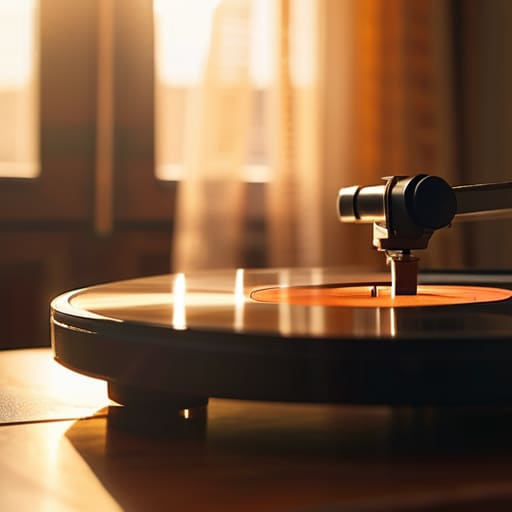
There is a particular kind of magic found in the crackle of a needle hitting a worn groove, or even in the digital warmth of a well-curated lo-fi stream. I’ve always found that low-fidelity background audio acts as a sort of velvet curtain for the mind, softening the sharp edges of a frantic day. It isn’t about demanding your undivided attention like a complex symphony might; rather, it provides a gentle, rhythmic pulse that allows the room to breathe.
When I sit in my study, letting the soft hiss and muffled percussion fill the corners, I feel the frantic pace of the modern world begin to recede. These minimalist electronic compositions don’t fight for space; they create a sanctuary. They offer a layer of sonic comfort that encourages you to set down your phone, pick up a book, or simply watch the shadows stretch across the floor. It is in these unhurried moments, wrapped in a blanket of steady, low-frequency sound, that I find the most clarity.
Small Rituals for a Deeper Listen
- Put the phone in another room. It’s hard to catch the subtle texture of a reverb tail or a soft synthesizer swell when your pocket keeps buzzing with the demands of the digital world. Give the music your undivided attention, even if it’s only for twenty minutes.
- Control your environment with intention. I find that the music changes entirely depending on the light; dim the lamps, perhaps light a single candle, and let the shadows soften the edges of the room. It prepares the eyes to let the ears lead.
- Invest in a physical connection. While streaming is convenient, there is something about the tactile ritual of placing a needle on a record or even just sitting in a dedicated chair that signals to your brain: “The day is over, and the listening has begun.”
- Listen for the “silence” between the notes. Ambient music isn’t always about the sound itself, but the space the sound creates. Don’t rush to fill every gap; let the stillness settle in your chest before the next melody drifts in.
- Keep a notebook nearby. Much like I do when I’m sketching the cornices of an old theater, try jotting down a single word or a fleeting feeling a particular track evokes. It helps you anchor the experience, turning a mere background noise into a lasting memory.
The Small Things That Remain
Treat ambient music not as background noise to be ignored, but as an invitation to finally settle into your own space.
Use the texture of low frequencies and soft melodies to create a boundary between the rush of the day and the stillness of the night.
Remember that the goal isn’t to achieve perfect silence, but to find a rhythm that allows you to notice the architecture of your own thoughts.
The Texture of Silence
“Ambient music isn’t just something you play to fill a room; it’s a way to soften the edges of a long day. It’s like the low hum of a city at midnight—it doesn’t demand your attention, it simply invites you to sit still and finally hear your own thoughts.”
Petra Lindgren
The Last Note
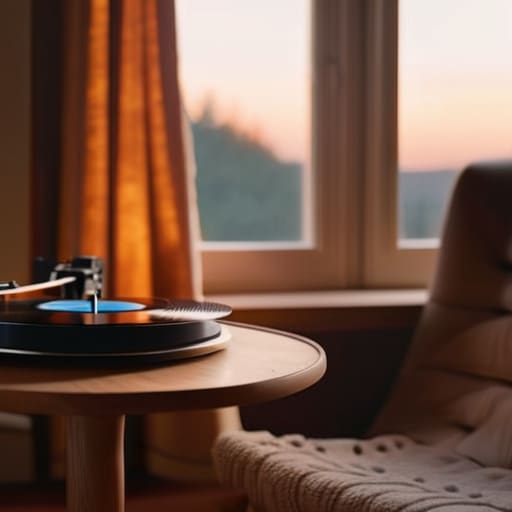
As the evening settles, I find myself returning to the same realization: ambient music isn’t just something we play to fill the silence; it is a tool for reclaiming our time. We have discussed how these low-fidelity textures can act as a buffer against the frantic pace of the modern world, and how the simple act of listening can transform a room from a mere space into a sanctuary. Whether it is the gentle hum of a synth or the crackle of a well-loved record, these sounds allow us to practice a quiet sort of mindfulness, turning the background noise of life into something deliberate and restorative.
I often sit at my desk after a long walk, sketching the lines of a building or simply watching the way the lamplight hits the floor, and I realize that the most important moments are rarely the loudest ones. Don’t feel the need to rush through your playlist or treat your evening as something to be conquered. Instead, I invite you to lean into the stillness. Let the music drift, let the lights stay low, and allow yourself the grace of a slow descent into the night. After all, it is in these quiet, unhurried intervals that we truly find ourselves again.
Frequently Asked Questions
How do I find the right balance so the music stays in the background without becoming mere noise?
It’s a delicate thing, much like finding the right lighting for a room. You don’t want a spotlight; you want a glow. I find the trick is to treat the music as an architectural element rather than a performance. Keep the volume just below the level of your own thoughts. If you find yourself tapping your foot or trying to follow a melody, it’s too loud. It should feel like a soft shadow—present, but never demanding your attention.
Are there specific instruments or textures that help ground a room more effectively than others?
I’ve always found that certain textures carry a certain weight—a physical presence, if you will. There is something inherently grounding about the woody, resonant hum of a cello or the soft, rhythmic brush of a snare drum. They feel tactile, almost like the grain of an old desk. Avoid anything too bright or piercing; instead, look for those low, velvet frequencies that seem to settle into the corners of the room and hold it steady.
How can I transition from a loud, busy day into a listening session without feeling restless?
I used to think I could just flip a switch and find peace, but the mind doesn’t work like a record player. If you’re feeling that frantic, leftover energy from the day, don’t force the silence. Start with something tactile. Pour a glass of something slow, dim the lamps, and let the music start at a low volume—almost a whisper. Let the sound bridge the gap between the chaos you left behind and the stillness you’re seeking.
