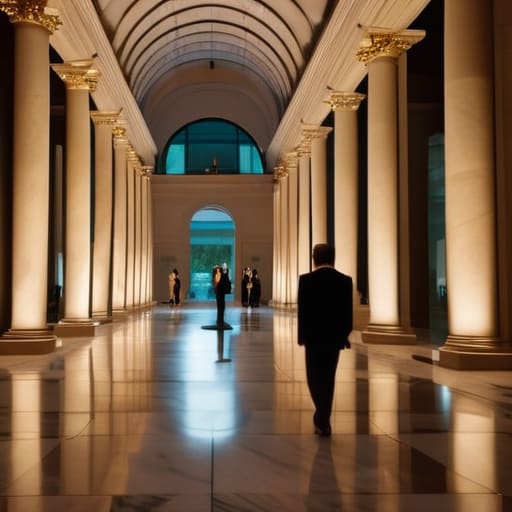
I remember standing in the middle of a crowded gallery last autumn, the air thick with the smell of expensive perfume and the frantic, hollow chatter of people more interested in their phone screens than the oil paintings before them. It was one of those overly curated museum night events that felt less like a cultural experience and more like a high-speed social marathon. I found myself retreating to a quiet corner near the sculpture garden, just wanting to hear the soft click of my own footsteps against the marble, away from the performative energy that seems to plague so many modern outings.
I’m not here to tell you which gala has the most impressive guest list or which venue offers the trendiest cocktail. Instead, I want to help you find the quiet magic that happens when the daytime crowds finally vanish. I’ll be sharing my personal guide to navigating museum night events with intention, focusing on the corners where the lighting is just right and the atmosphere allows for actual reflection. We are going to look for the spaces where you can actually breathe, listen, and rediscover the art without the unnecessary noise.
Table of Contents
Finding Stillness in After Hours Museum Programming
There is a particular kind of magic that settles over a gallery once the heavy doors have closed to the midday rush. I’ve spent most of my life among files and dusty ledgers, so I know the value of a quiet room. When you step into these evening cultural experiences, the atmosphere shifts; the air feels heavier, more intentional. You aren’t just viewing an object; you are sharing a private moment with it. I find that the soft, directional lighting of a nighttime exhibition allows the textures of a canvas or the grain of a sculpture to finally speak for themselves without the distraction of a crowd.
If you can, try to seek out the late-night gallery tours offered by some of our local institutions. There is something deeply restorative about a guided walk through the shadows, where the curator’s voice carries more weight in the stillness. It isn’t about checking a box on a tourist itinerary; it’s about the slow, deliberate observation of things that have survived the centuries. In these moments, the museum stops being a building and starts feeling like a sanctuary.
Chasing Shadows With Nighttime Art Installations
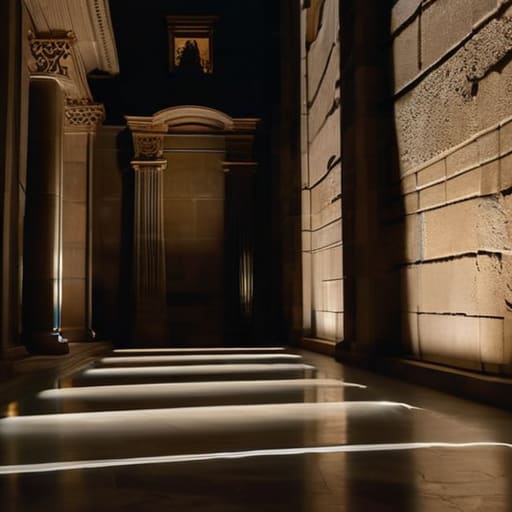
There is a specific kind of magic that happens when the overhead lights are dimmed and the focus shifts entirely to the interplay of light and shadow. I’ve always found that nighttime art installations possess a weight that daytime viewing simply cannot replicate. During the day, the sun is a blunt instrument, exposing every crack in the floor and every stray dust mote. But at night, the darkness acts as a velvet curtain, allowing the installations to breathe. I remember sitting in a darkened wing last autumn, watching a projection dance across a limestone wall; it felt less like looking at an exhibit and more like witnessing a private conversation between the artist and the architecture.
These evening cultural experiences demand a different kind of attention. You aren’t just passing through a corridor; you are navigating a landscape of silhouettes. I often find myself pulling out my notebook during these moments, trying to capture how a single spotlight can turn a sculpture into something entirely new and unrecognizable. It’s in these quiet, shadowed corners that the art truly begins to speak, far away from the frantic energy of the afternoon crowds.
A Few Notes for the Intentional Evening
- Arrive early, but not too early. I’ve found the best moments occur just as the initial rush of the crowd begins to settle, leaving a pocket of quiet for you to actually breathe with the exhibits.
- Leave the phone in your pocket. If you find something that moves you, don’t reach for a lens immediately; take a moment to sketch it in a notebook or simply sit with the feeling. The memory lasts longer than a digital file ever will.
- Seek out the acoustic corners. Many museums pair their night events with live music—often jazz or chamber pieces. Find a spot near the performer where the sound can wrap around you while you wander.
- Follow the light, not the signs. Often, the most evocative parts of a nighttime exhibition are found in the shadows or the way a single spotlight hits a texture. Don’t feel pressured to follow the prescribed path.
- Embrace the solitude. There is a particular kind of magic in being alone with a piece of history after the sun has gone down. Don’t feel the need to fill the silence with constant conversation; let the art do the talking.
The Quiet Rewards of the Late Hour
Seek out the spaces between the crowds; it is in the stillness of an empty gallery that you finally hear the conversation between the art and your own thoughts.
Let the lighting dictate your pace, allowing the dim, intentional atmosphere of a night event to pull you out of the daily rush and into a more observant state of mind.
Remember that these evenings are not about checking an exhibit off a list, but about finding those small, lingering details that stay with you long after you’ve stepped back out into the street.
The Weight of a Quiet Gallery
There is a particular kind of magic that only happens when the museum doors lock behind the daytime crowds; it’s in that shift from a public space to a private sanctuary, where the art finally seems to breathe in the dim light, and you realize you aren’t just looking at history—you’re sitting with it.
Petra Lindgren
A Final Note Before the Lights Dim
As I pack my notebook away and feel the weight of the evening’s observations, I’m reminded that these museum nights offer something far more valuable than mere entertainment. Whether you are seeking the quiet sanctuary of a gallery after the school groups have gone, or you are drawn to the vibrant, pulsing energy of a modern light installation, you are participating in a rare kind of communion. We’ve discussed how the stillness of the after-hours programs allows for a deeper connection to history, and how the interplay of shadow and art can shift your entire perspective. These events aren’t just about seeing things; they are about learning how to truly look.
My advice to you is simple: don’t just go to check a box on a weekend itinerary. Go with the intention of slowing down. Let the cool air of the marble halls settle your nerves and allow the music or the silence to dictate your pace. In a world that demands we move faster every single day, there is a quiet rebellion in choosing to linger in front of a single canvas or a flickering shadow. Make time for the things that linger in your mind long after you’ve stepped back out onto the street. After all, the best parts of a city aren’t found in the rush, but in the pauses we take to appreciate them.
Frequently Asked Questions
Do these late-night sessions tend to be boisterous social gatherings, or can one still find a quiet corner to truly reflect?
It depends on the venue, of course, but I’ve always found that even the most spirited gatherings have their own quiet rhythms. While some nights lean into the social buzz—the clink of glasses and the hum of conversation—there is almost always a sanctuary to be found. I usually look for those dimly lit alcoves or a quiet gallery wing. Even amidst a crowd, you can still find a moment of profound, solitary reflection.
Is there a particular way to prepare for these events to ensure I don't miss the subtle details that only emerge in the evening light?
Don’t rush in with a checklist. Instead, bring a small notebook—much like the one I carry—and perhaps a single, focused question for each piece you encounter. Leave your phone in your pocket; the blue light is a thief of atmosphere. I find that arriving early to sit in the quiet, before the program begins, helps settle the eyes. When you stop trying to “see everything,” you finally start seeing the things that matter.
How much do the acoustics of the museum space change once the daytime crowds have cleared out?
It’s a transformation, really. During the day, the museum is a cacophony of shuffling feet, hushed whispers, and the heavy, restless energy of a crowd. But once those doors close to the public, the room breathes differently. The acoustics settle into something much more intimate. Without that constant human hum, you start to hear the building itself—the soft click of a heel on marble or the way a single note from a nearby performance lingers in the rafters.
