
I remember sitting in the corner of a basement club in Detroit back in ’78, the air thick with the scent of old wood and clove cigarettes, watching a group of kids find their entire identity in a single, distorted guitar chord. They weren’t just listening to a genre; they were building a world. Nowadays, people talk about music subcultures as if they are mere trends to be consumed or hashtags to be scrolled past, but that misses the point entirely. To the casual observer, it’s just a costume or a playlist, but to those of us who have lived through the shifts, it’s about finding a sense of belonging in the noise.
I’m not here to give you a lecture on sociological theories or a list of the most expensive concert tickets in the city. Instead, I want to pull back the curtain on what these movements actually feel like when the lights go down. I promise to share the honest, unvarnished truth about how these communities form and, more importantly, how to recognize the authentic pulse of a movement before it gets polished away by the mainstream.
Table of Contents
The Quiet Pulse of Musical Genre Evolution
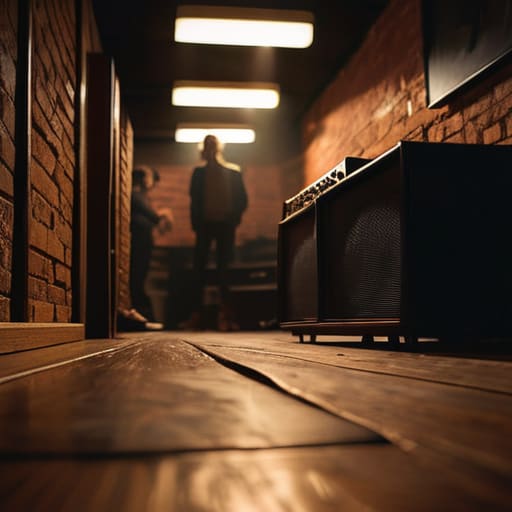
I’ve spent many evenings watching the way a room shifts when a new sound takes hold. It isn’t just about the tempo or the melody; it’s about the way a group of people begins to move as a single organism. When we look at musical genre evolution, we often focus on the technical shifts—the invention of the synthesizer or the distortion of a guitar—but the real story is found in the people. A genre doesn’t just happen in a studio; it happens in the basement clubs and the dusty record shops where a shared identity begins to crystallize.
There is a certain inevitable rhythm to how these movements rise and fall. What starts as a niche interest among a few restless souls eventually shapes the very air of a city. I’ve noticed that as these sounds mature, they leave behind more than just recordings; they leave a blueprint for how we dress, how we speak, and how we congregate. It is a fascinating study of youth counterculture movements, where the music serves as a heartbeat for those who feel the world is moving just a little too fast for their liking.
Tracing the Subculture Aesthetic Trends in Dim Light

I’ve often found that if you watch the way people dress in the corner of a basement club, you’re seeing more than just fashion; you’re seeing a map of their intentions. There is a specific visual language to these spaces—the heavy leather of a punk venue or the soft, oversized knits of a folk revival—that defines the subculture aesthetic trends of an era. It isn’t about vanity. It’s about a visual shorthand that says, I belong to this rhythm. When I sit in these dimly lit rooms, sketching the way the shadows fall across a velvet booth, I realize that the clothes are simply the armor we wear to protect the sanctuary of the sound.
These aesthetics act as a quiet signal, a way for the disenfranchised to find one another without saying a word. We see it in the way youth counterculture movements use color and texture to push back against the sterile, polished world outside. It is a beautiful, tactile rebellion. To an archivist, these details are the most precious artifacts we have; they are the physical evidence of a moment when a group of people decided to stop blending in and start truly feeling something together.
How to Listen Between the Notes
- Don’t just listen to the melody; listen to the room. A subculture isn’t just a playlist; it’s the way the air feels in a basement club or the specific, reverent hush of a crowd waiting for a needle to drop.
- Seek out the physical artifacts. In my years in the archives, I learned that a scratched sleeve or a hand-drawn flyer tells a much deeper story about a movement than any digital streaming algorithm ever could.
- Respect the slow burn. You can’t understand a scene by rushing through a dozen venues in one night. Sit in one corner, order a drink, and let the rhythm of the people become part of the music.
- Look for the visual language. Every subculture has its own way of dressing and decorating its spaces. Notice the textures—the worn leather, the neon flicker, the heavy velvet—because they are as much a part of the sound as the instruments themselves.
- Value the gatekeepers, but find your own way in. Every scene has its elders and its legends, but don’t let their rules stop you from finding your own personal connection to the beat.
What Lingers After the Music Fades
Subcultures aren’t just about the sounds we hear, but the shared, quiet spaces—the dim rooms and the specific way a crowd breathes together—that create a sense of belonging.
To truly understand a movement, you have to look past the surface noise and notice the small, intentional details, from the way a venue is lit to the way people dress for the occasion.
Music has a way of anchoring us in time; by slowing down and paying attention to these niche scenes, we find a connection to history that a rushed life often overlooks.
The Soul in the Static
“A subculture isn’t just a collection of sounds or a specific way of dressing; it’s a shared sanctuary found in the margins, where the music acts as a quiet pact between strangers to notice the world a little more deeply.”
Petra Lindgren
The Resonance That Stays
As I sit here in the corner of this quiet lounge, scribbling a few notes about the molding on the ceiling, I find myself thinking back on everything we’ve traced. We have looked at how genres don’t just change; they breathe and evolve, and how the very aesthetic of a movement—the clothes, the lighting, the grit—serves as a visual language for those who belong. Music subcultures are more than just a collection of sounds or a way of dressing; they are living archives of human connection. They represent those rare moments when a group of people decides to build a world of their own, tucked away from the frantic pace of the mainstream, held together by a shared, rhythmic heartbeat.
In a world that seems increasingly determined to move faster and shout louder, there is a profound dignity in the quiet corners of these subcultures. I hope you take a moment, perhaps this very evening, to step away from the rush and find your own version of that dim-lit sanctuary. Don’t just listen to the melody; listen to the silence between the notes and the way the room feels when the right song begins to play. Life is far too short to spend it in the bright, sterile glare of the ordinary. Go find the things that stay with you long after the lights go up and the music fades into the night.
Frequently Asked Questions
How do these musical movements manage to keep their soul when they finally step out of the shadows and into the mainstream?
It’s a delicate thing, isn’t it? When a sound moves from a basement to a stadium, it risks losing its breath. But the ones that endure—the ones that keep their soul—usually do so because they refuse to polish away the grit. They carry that original, unvarnished intent with them. It’s not about the scale of the venue; it’s about whether the music still feels like a secret shared between friends, even in the bright lights.
Is there a way to truly appreciate the history behind a subculture without falling into the trap of mere nostalgia?
It’s a delicate balance, isn’t it? To avoid the trap, you have to look past the vintage jackets and the faded posters. Nostalgia is just a longing for a feeling, but history is about the why. Don’t just listen to the record; try to understand the struggle or the joy that forced that specific sound into existence. When you study the friction that created the music, you aren’t just reminiscing—you’re actually listening.
Where can one find those rare, quiet spaces today where music still feels like a shared secret rather than a performance?
You won’t find them on a trending list or a bright neon sign. Look instead for the places that don’t bother with much marketing—the basement jazz spots with peeling wallpaper, or that one corner cafe that stays open late just for the enthusiasts. They’re usually tucked away in the seams of the city, where the acoustics are better than the lighting. You have to listen for the low hum of a crowd that’s actually there to hear, not just to be seen.
