
I’ve spent most of my life tucked away in archives, surrounded by the silent weight of paper and ink, but I’ve always found that the true history of a people isn’t found in what they wrote down, but in what they sang. There is a peculiar, invisible thread that connects a melody to the social fabric of a city, a way that rhythm can either build a community or define its boundaries. Often, when we listen to a record, we miss the deeper currents of human connection swirling beneath the notes. I’ve spent many long evenings wondering why certain sounds move us to tears while others feel like mere background noise, which is why I find myself constantly returning to books on the sociology of music to help decode those mysteries.
In the following pages, I want to share a few specific titles that helped me understand how sound shapes our very existence. These aren’t just academic texts; they are maps to the human experience. Through these five selections, you will discover how music acts as a mirror to our struggles, our triumphs, and our shared identity. I hope they encourage you to listen a little more closely next time the needle drops.
Table of Contents
The Rhythm of the Crowd
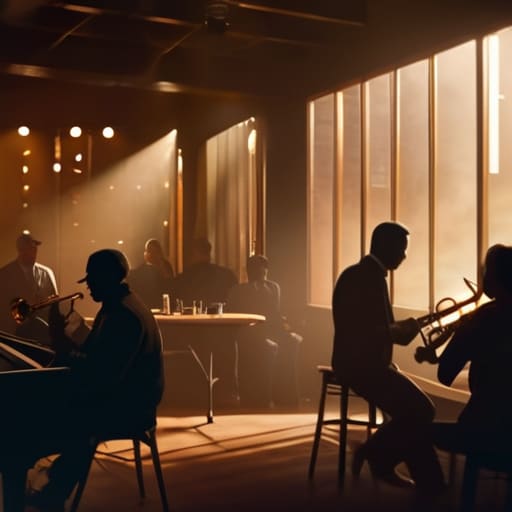
There is a particular kind of magic that happens when a room full of strangers begins to move in unison to a single beat. In Music and Society, the authors peel back the layers of this phenomenon, looking not just at the notes on the page, but at the way music acts as a social glue for the communities that create it. It reminds me of the old jazz basements I used to frequent, where the music wasn’t just a performance, but a shared language that bridged the gap between people who had nothing else in common.
Melodies as Cultural Maps

I have always believed that if you want to understand the history of a city, you shouldn’t look at the monuments; you should listen to its songs. Sociology of Music approaches the subject with a similar, much more intimate lens, treating musical genres as living archives of human experience. It explores how music doesn’t just reflect the culture it belongs to, but actively shapes the values and identities of the people within it.
The Power of the Soundscape

We often forget that we are constantly submerged in a sea of sound, from the hum of the city to the quietude of a cathedral. In Sound Studies: An Introduction, the focus shifts toward the broader implications of our auditory environment and how it dictates our social interactions. It’s a perspective that forced me to slow down and actually listen to the architecture of the spaces I inhabit, much like the sketches I make in my notebook.
Identity in Every Note
Who are we when the music starts playing? This is the central question that lingers after reading Music, Identity, and Society. The book dives into the way we use musical taste to signal our place in the world, creating invisible boundaries between “us” and “them.” It’s a study of the subcultures that define themselves through a specific drum beat or a certain way of holding a guitar.
The Politics of the Playlist
It is easy to think of music as an escape from the world, but in The Sociology of Popular Music, we are reminded that it is often a direct engagement with it. This work examines how the music industry and the structures of fame influence the way we perceive reality. It looks at the mechanics of influence and how certain sounds are elevated to represent the “voice of a generation” while others are pushed into the shadows.
The Notes We Leave Behind
Music is never just a collection of sounds; it is a living archive of the people who lived through it, shaped by the very streets and social structures we walk every day.
To truly listen is to look beyond the melody and observe how a song can act as a mirror, reflecting the quiet tensions and shared joys of a community.
By studying the sociology of sound, we learn that the most meaningful rhythms aren’t just played on a stage, but are woven into the fabric of our collective history.
The Resonance of the Collective
We often mistake a song for a solitary experience, but when you peel back the layers through these pages, you realize a melody is never just about one person; it is the shared heartbeat of a room, a city, or an entire era, captured in a single, fleeting vibration.
Petra Lindgren
The Resonance That Lingers
As we close the covers on these various perspectives, it becomes clear that music is never just a collection of notes or a rhythmic pattern. Whether we are looking through the lens of class struggle, cultural identity, or the way a subculture can form in the dim corner of a basement club, these books remind us that sound is a social glue. We’ve explored how melodies act as mirrors to our societal structures and how the act of listening is, in itself, a deeply political and communal gesture. To study the sociology of music is to study the very fabric of human connection, understanding that every song carries the weight of the world that produced it.
I often find myself sitting in a quiet corner of a jazz club after the set has ended, watching the dust motes dance in the spotlight, thinking about how much of our history is written in the songs we choose to sing. I hope these readings encourage you to listen a little more closely the next time you find yourself lost in a melody. Don’t just hear the rhythm; try to hear the stories breathing underneath it. In a world that demands we move faster and louder, I invite you to take a moment to sit still, pick up a book, and discover the quiet truths that only music can reveal.
Frequently Asked Questions
Are these books more focused on academic theories, or can someone without a degree in sociology still find something meaningful in them?
I understand the hesitation. When I first started digging through archives, I often felt intimidated by heavy academic jargon. But truthfully, most of these selections aren’t just for the lecture hall. While they certainly touch on theory, they are really about the human experience—why we dance, why we mourn, and how a song can define a generation. Even without a degree, you’ll find plenty of beauty in how they connect the notes to our lives.
Do any of these selections touch upon how modern digital streaming is changing the way we connect with music socially?
To be honest, most of these selections focus on the foundational ways music shapes our communities, but if you’re looking for the digital shift, keep a close eye on the third entry. It touches on how the communal ritual of shared listening is being replaced by the solitary, algorithmic glow of a screen. It’s a bit heartbreaking to think about, but it’s a vital part of understanding how our social connection to melody is evolving.
If I'm looking for something a bit more personal and less clinical, are there any titles that focus on the emotional impact of music on a community?
I understand exactly what you mean. Sometimes the data and the theories feel a bit too cold, like looking at a preserved specimen under glass rather than feeling the pulse of the room. If you want to feel the heartbeat of a community through its songs, I’d suggest looking into works that lean into ethnography. They tend to capture how a shared melody can turn a group of strangers into a family.
