I was sitting in a basement club in Chicago a few years back—the kind of place where the air feels heavy with humidity and old secrets—when a young man next to me started lecturing about the academic complexities of blues music history. He was citing dates and migration patterns like he was reading from a dry textbook, completely missing the fact that the man on stage was currently bleeding through his guitar strings. It’s a common mistake, isn’t it? We try to turn something so visceral into a sterile timeline of facts and figures, forgetting that the blues was never meant to be studied under a microscope; it was meant to be felt in the gut.
I’m not here to give you a lecture or a list of names to memorize for a quiz. Instead, I want to walk you through the actual soul of the genre, tracing how those raw, Delta moans transformed into the sounds that define our modern world. I promise to skip the academic fluff and focus on the stories, the struggles, and the small, beautiful details that actually matter. We’re going to look at the history through the lens of the people who lived it, finding the truth in the shadows between the notes.
Table of Contents
African American Musical Traditions and the Deep Delta Roots
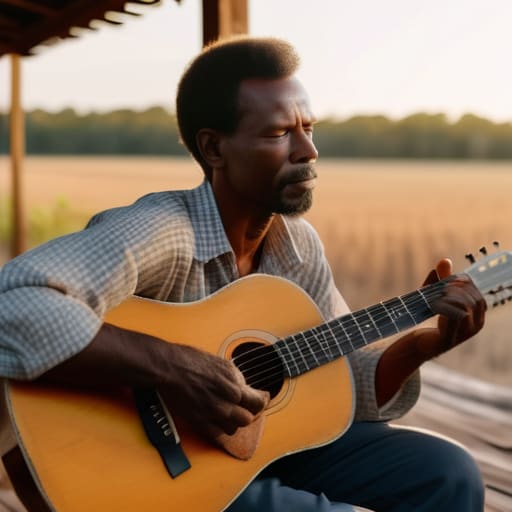
To understand where these sounds truly began, you have to look toward the soil of the Mississippi Delta. It wasn’t born in a studio or a classroom; it was forged in the heat and the heavy silence of the South. The African American musical traditions that served as the bedrock of this sound were a complex tapestry of spirituals, work songs, and field hollers. These weren’t just melodies; they were survival mechanisms, rhythmic expressions of a people finding a way to speak through the weight of their circumstances.
As I sit with my records, I can almost feel the shift in the Mississippi Delta blues evolution. It started with the raw, stripped-back intimacy of a single guitar and a voice that sounded like it had been weathered by a thousand storms. This was the era of the acoustic storyteller, where the music lived in the cracks of wooden porches. It’s a far cry from the polished, amplified sounds we hear today, but that original, unadorned grit is exactly what provides the DNA for everything that followed. Without those early, dusty notes, the world would have never learned how to truly swing or scream.
The Mississippi Delta Blues Evolution Through the Ages
As I sit here with my notebook, tracing the lines of a weathered storefront, I can’t help but think about how the music itself changed its shape. The Mississippi Delta blues evolution wasn’t a sudden shift, but a slow, aching metamorphosis. It began with a man, a guitar, and perhaps a porch in the humid heat, where the acoustic blues felt as raw and unpolished as the soil itself. There was a certain solitude in those early recordings—a sense that the music was being pulled directly from the earth to soothe a weary soul.
But as the decades turned, the sound began to migrate, moving from the dusty roads toward the neon hum of the city. This transition from the rural South to the urban North brought about the rise of electric blues, where the plugged-in amplifier finally gave the music a voice loud enough to match the roar of the streets. It was this very electricity that eventually sparked the fire of the next generation; you can trace a direct line from those stinging, amplified notes to the foundational influence of blues on rock and roll. The instruments grew louder, but the ache remained exactly the same.
How to Listen Like You’re Really There
- Don’t just listen to the melody; listen for the spaces between the notes. In the old blues, it’s often what the musician doesn’t play—the heavy, intentional silences—that carries the most weight.
- Keep an eye on the geography. To truly grasp the history, you have to understand how the music traveled from the dusty roads of the Delta to the crowded, electric streets of Chicago. It’s a map of human movement.
- Learn to recognize the “call and response.” It’s a conversational rhythm inherited from field hollers and spirituals, and once you hear it, you’ll realize the music isn’t just a performance; it’s a dialogue.
- Look past the polished recordings. If you want the truth, seek out the rough edges—the scratchy vinyl, the slightly out-of-tune guitar, the voice that breaks. That imperfection is where the history lives.
- Study the instruments as tools of survival. A guitar wasn’t just an instrument in the hands of a traveling bluesman; it was a companion, a livelihood, and sometimes, the only way to tell a story that words couldn’t reach.
What Remains When the Music Fades
The blues isn’t just a genre you listen to; it’s a survival mechanism born from the soil and the struggle of the Delta, carrying the echoes of those who came before us.
To truly hear the history, you have to look past the technicalities and feel the weight of the stories being told through every bent note and weary rhythm.
Understanding the evolution of the blues means recognizing how a singular, lonely sound from the South eventually became the heartbeat of almost every modern melody we hear today.
More Than Just a Note
You can study the sheet music and the timelines all you want, but the real history of the blues isn’t found in a textbook; it’s found in that singular, aching moment when a singer’s voice cracks just enough to let the truth spill out.
Petra Lindgren
The Echo That Never Fades
Looking back through the archives of this music, it becomes clear that the blues was never just a genre; it was a survival mechanism. We’ve traced its journey from those heavy, rhythmic spirituals and the raw, solitary cries of the Delta to the electrified, roaring stages that eventually paved the way for everything we listen to today. It is a lineage of resilience and transformation, moving from the dusty porch to the neon-lit city streets without ever losing that essential, aching honesty. Whether it’s the acoustic slide of a guitar or the wail of a brass section, the thread remains the same: a profound need to turn sorrow into something that can be shared.
As I sit here in the quiet of my study, listening to the crackle of an old 78rpm record, I’m reminded that the blues doesn’t ask for your attention—it demands your presence. It asks you to stop running, to sit in the shadows, and to finally feel the weight of the notes. In a world that feels increasingly hurried and hollow, I find a strange sort of comfort in these old melodies. They remind us that our struggles are part of a much larger, much more beautiful song. So, the next time you find yourself in a dim room with a good melody playing, don’t rush. Just listen.
Frequently Asked Questions
How did the transition from acoustic Delta blues to the electric sounds of Chicago actually change the feeling of the music?
It was a shift from the intimate to the visceral. In the Delta, the blues was a conversation between a man and his guitar—quiet, dusty, and deeply personal. But when those musicians hit Chicago, they had to fight to be heard over the roar of the city. The electricity added a certain grit and urgency; it turned a solitary ache into a communal roar that you could feel vibrating right through your chest.
I wonder, how much of the early blues was passed down through oral tradition before it was ever ever written into those old archives?
That’s the heart of the matter, isn’t it? Most of it. Before a single note was etched into wax or scribbled on staff paper, the blues lived in the breath and the memory of the people. It was a shared language, passed from hand to hand, song to song, in the shadows of the Delta. As an archivist, I know we only capture the echoes; the true soul was always in the telling.
Which specific artists do you think truly bridged the gap between the raw field hollers and the polished blues we hear on records today?
It’s a delicate transition, isn’t it? Moving from the unbridled ache of a field holler to something captured on wax. For me, Robert Johnson is the obvious bridge, but I often find myself thinking of Son House. He possessed that raw, spiritual urgency—that primal grit—yet he understood how to shape it into a song structure that could hold a listener’s attention. He kept the soul intact even as the form began to settle.
