Category: Music

  • Why Vinyl Records Still Matter

    Why Vinyl Records Still Matter

    I remember sitting on the floor of my first apartment in Ann Arbor, the air thick with the scent of old paper and floor wax, waiting for the exact moment the needle found its groove. There was no “skip” button, no algorithm nudging me toward a catchy chorus, and certainly no way to listen while multitasking through a chore. You had to actually be there. To me, vinyl records were never about achieving some sterile, high-fidelity perfection that audiophiles argue about in expensive forums; they were about the tactile ritual of pulling a sleeve from the shelf and letting the crackle of the wax signal that the world was finally slowing down.

    I’m not here to sell you on a thousand-dollar turntable or convince you that digital music is a hollow lie. Instead, I want to share what I’ve learned from forty years of preserving history and a lifetime of listening. I’ll guide you through the honest, unpretentious joy of building a collection that actually means something to you. We aren’t chasing trends here; we are looking for those rare, resonant pieces of music that stay with you long after the room goes silent.

    Table of Contents

    Finding the Soul in Analog vs Digital Sound Quality
    Finding the Soul in Analog vs Digital Sound Quality.

    I often find myself sitting in my study, comparing the clinical perfection of a digital stream to the warm, textured breath of a spinning disc. Digital files are undeniably efficient—they are clean, precise, and utterly convenient—but they often lack the human imperfections that make music feel alive. When we discuss analog vs digital sound quality, we aren’t just talking about frequencies or bitrates; we are talking about the presence of air in the room. A digital file is a mathematical representation of a song, whereas a record is a physical manifestation of it.

    There is a subtle, rhythmic heartbeat found in the slight crackle of a groove that digital formats simply cannot replicate. It’s that warmth, that slight “roundness” to the mid-tones, that makes a jazz trumpet feel like it’s standing right there in the corner of your room. To truly capture this, one needs to move beyond basic gear and consider the best hi-fi audio setups that respect the medium. It isn’t about chasing the highest numbers on a spec sheet; it’s about finding a sound that feels like a conversation rather than a broadcast.

    A Record Player Setup Guide for Quiet Evenings
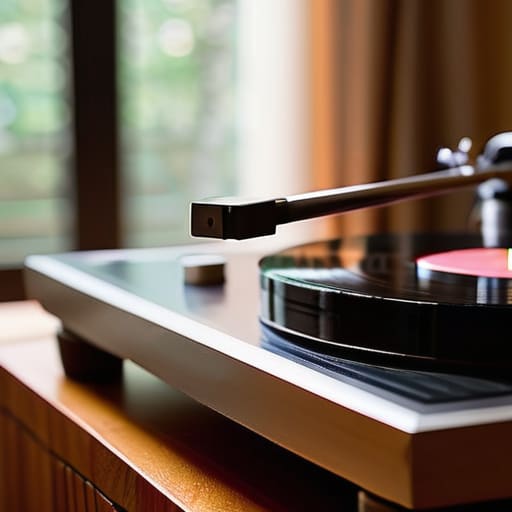
    A Record Player Setup Guide for Quiet Evenings

    When I first started building my own corner for listening, I realized it wasn’t about chasing the most expensive gear, but about creating a space that invited stillness. A proper record player setup guide doesn’t need to be a manual for an engineer; it’s more like setting a table for a guest. You want a sturdy, level surface—something that won’t vibrate when the bass begins to swell—and a turntable that feels intentional. I always tell people to focus on the connection between the stylus and the groove. If you aren’t sure about the clarity of your sound, a simple phonograph needle replacement can often breathe new life into a dusty old pressing, making it feel as though the artist is standing right there in the room with you.

    Once you have your components, the real magic lies in the placement. I prefer to keep my speakers at ear level, spaced just enough to let the soundstage breathe. It’s a slow process of trial and error, much like my old work in the archives, but the reward is a sense of immersion that no smartphone speaker could ever replicate. It’s about finding that perfect equilibrium where the equipment disappears and only the music remains.

    Small Rituals for a Long-Lasting Collection

    • Treat your sleeves with respect; a simple paper inner sleeve can prevent the kind of surface noise that ruins a quiet moment, and it keeps the edges from fraying over the years.
    • Mind the dust, for it is the enemy of clarity; a soft carbon fiber brush should become as much a part of your evening ritual as pouring a glass of something smooth.
    • Don’t rush the selection process; instead of scrolling through a digital library, let yourself wander through the crates, feeling the weight of the jackets and letting the art guide your ears.
    • Watch your hands, not just the needle; the oils from our skin are a quiet thief of sound quality, so try to handle your records only by the outer edges.
    • Listen to the whole side, not just the hits; there is a narrative arc to an album that you only truly appreciate when you commit to sitting still until the final groove fades into silence.

    The Small Joys of a Slow Evening

    Don’t chase perfection; instead, embrace the warmth and the slight, human imperfections that make analog sound feel alive.

    View your record player not as a piece of technology, but as an invitation to sit still and reclaim your time.

    Let the ritual of the needle and the sleeve become a necessary pause in a world that is far too hurried.

    The Weight of a Moment

    A digital file is a ghost that vanishes the moment you click away, but a record is a physical commitment; it demands you sit, it asks for your patience, and in return, it gives you a piece of its soul.

    Petra Lindgren

    The Last Note Fades
    Vinyl record player: The Last Note Fades.

    As I sit here in my study, looking over my notes, I’m reminded that choosing vinyl isn’t merely about the pursuit of a specific frequency or the technicalities of a turntable setup. It is about the intentionality of the experience. We have discussed how the warmth of analog captures a tangible human presence that digital files often strip away, and how a dedicated listening space allows us to truly inhabit the music. By moving away from the convenience of a shuffle button and toward the deliberate act of placing a needle on a groove, we reclaim our attention from the frantic pace of the modern world. It is a commitment to noticing the details that most people simply rush past.

    Ultimately, my hope is that you don’t just view records as objects to be collected and shelved, but as invitations to slow down. There is a profound, quiet dignity in a room lit only by a lamp, where the only thing that matters is the swell of a saxophone or the crackle of a well-loved pressing. In a world that demands we move faster every single day, I find that the most radical thing we can do is choose to linger. So, find a piece of music that speaks to your soul, let the lights dim, and allow yourself the luxury of a slow, intentional evening.

    Frequently Asked Questions

    How do I know if a vintage record is still worth buying, or if it’s just a beautiful piece of history that’s too scratched to play?

    I’ve spent many afternoons hunched over crates in dusty shops, and I’ll tell you this: don’t let a pretty sleeve fool you. Before you commit, hold the disc up to the light. You’re looking for deep, rhythmic scratches—the kind that feel like a canyon under your fingernail—rather than just light surface scuffs. If the grooves look truly wounded, keep it for the shelf. But if it’s just a bit of dullness, it’s often worth the rescue.

    Is it possible to start a collection without spending a fortune on high-end equipment right away?

    Oh, absolutely. Please, don’t let the price tags of high-end audiophile gear intimidate you. I remember my first setup; it was nothing more than a modest, secondhand turntable and a pair of modest speakers, but it felt like a cathedral. Start small. Find a reliable, entry-level player and focus your energy on the hunt for records. The music is the heartbeat; the equipment is just the vessel. Build your library first.

    What is the best way to care for these old discs so they actually last another forty years?

    Treat them with the same reverence you’d give a rare manuscript. First, never touch the grooves; those oils from your skin are silent killers. Invest in a decent carbon fiber brush to sweep away the dust before every play, and keep your discs in anti-static sleeves. If you find a real treasure, a wet cleaning is worth the effort. It’s a bit of a ritual, I know, but it ensures the music stays alive.
  • The Evolution of Jazz History

    The Evolution of Jazz History

    I remember sitting in the back of a basement club in Chicago, the air thick with the scent of old wood and spilled bourbon, watching a saxophonist close his eyes as if he were praying. Most people approach jazz history as if it’s a dry syllabus of names and dates to be memorized for a test, a sterile timeline of “significant eras” found in a dusty textbook. But they miss the point entirely. You don’t learn this music by reading a ledger; you learn it by feeling the vibration of a bass line in your very bones and understanding that every note was a response to the city breathing around it.

    I’m not here to give you a lecture or a list of academic milestones that will only make your eyes glaze over. Instead, I want to walk you through the shadows of the past to show you how this music actually shaped the heartbeat of our streets. I promise to skip the pretension and the academic fluff, offering instead a way to see the human stories behind the legends. We aren’t just studying a genre; we are looking for the soul that remains long after the final set has ended.

    Table of Contents

    The New Orleans Jazz Origins and the First Dim Lights

    The New Orleans Jazz Origins and the First Dim Lights.

    To understand where this all began, you have to look past the textbooks and imagine the humidity of a Louisiana night. The new Orleans jazz origins weren’t found in a pristine classroom, but in the crowded, salt-stained streets where brass bands met the soulful ache of the delta. It was a collision of cultures—a messy, beautiful alchemy of rhythm and grit. I often think about those early players, sitting in the dim corners of Storyville, realizing that they weren’t just playing notes; they were translating the very breath of the city into something audible.

    There is a profound blues and jazz connection that acts as the heartbeat of this entire lineage. It’s that specific, heavy feeling in the melody that tells you a musician isn’t just performing, but surviving. As I sit in these quiet clubs today, sketching the heavy velvet curtains or the worn edges of a piano, I can almost hear the echoes of those first improvisations. They weren’t following a map; they were finding their way through the dark, one note at a time, creating a language that would eventually change the world.

    The Blues and Jazz Connection Finding the Souls Rhythm

    The Blues and Jazz Connection Finding the Souls Rhythm

    If New Orleans provided the heartbeat, the blues provided the blood. I’ve often sat in quiet corners of dimly lit lounges, thinking about how the blues and jazz connection isn’t just a matter of musicology; it’s a matter of shared survival. While jazz began to dance and swing, the blues remained the grounded, aching truth beneath the melody. It is that specific, heavy feeling—the way a note seems to hang in the air just a second too long—that gives the music its humanity.

    When I look back through my old archives, I see that the real magic happened when musicians stopped playing the notes on the page and started playing the notes in their spirits. This is where we see the birth of true jazz improvisation techniques, as players learned to weave their personal sorrows and joys into the rhythm. They weren’t just performing; they were exhaling. To understand the soul of a song, you have to listen for that blue note, that slight imperfection that makes the music feel as fragile and real as a handwritten letter.

    How to Listen Without Rushing

    • Put down the phone and find a corner. You can’t hear the nuances of a Miles Davis trumpet solo if you’re busy checking your notifications; you have to let the room settle around you first.
    • Look for the lineage, not just the names. When you hear a modern saxophonist, try to trace that breath back to the greats—don’t just listen to the song, listen to the history breathing through the instrument.
    • Visit the places where the walls have absorbed the sound. There is a specific kind of magic in a basement club that has seen decades of improvisation; the atmosphere is just as much a part of the music as the notes themselves.
    • Don’t be afraid of the silence between the notes. In my years archiving old recordings, I learned that the tension in a piece often lives in those quiet, intentional pauses where the musicians are simply feeling the room.
    • Keep a notebook by your side. I’ve found that sketching the architecture of a venue or jotting down a single phrase that struck you helps anchor the music in your memory long after the set has ended.

    What Remains When the Music Fades

    Jazz isn’t just a collection of notes or a timeline of dates; it is the living, breathing pulse of a city’s history that you can only hear if you’re willing to slow down.

    To understand the music, you must respect its roots in the blues—the raw, honest ache that gives every improvised melody its purpose and its weight.

    The true magic of a jazz era lies in the atmosphere—the dim lights, the shared silence, and the way a single song can make a crowded room feel like a private sanctuary.

    The Texture of Time

    You can read all the textbooks you want about dates and movements, but jazz history isn’t found in a library index; it’s found in the way a melody lingers in a smoke-filled room long after the musicians have packed away their instruments.

    Petra Lindgren

    The Echo That Remains

    Jazz history: The Echo That Remains.

    Looking back through the archives of these sounds, it becomes clear that jazz was never just a collection of notes or a technical evolution of scales. We’ve traced it from those humid, early nights in New Orleans through the deep, aching roots of the blues, seeing how each movement served as a way for people to reclaim their own stories. It is a history built on resilience and improvisation, a constant dialogue between the individual spirit and the collective heartbeat of the city. When we study these shifts, we aren’t just looking at musical genres; we are witnessing the very way humanity has learned to turn struggle into something sublime.

    As I sit here in the dim light of my study, listening to the crackle of an old Coltrane record, I am reminded that the history of jazz isn’t something trapped in a dusty textbook or a museum display. It is alive, breathing in the quiet corners of every basement club and every late-night street corner. My hope is that you don’t just walk away with a timeline of dates and names, but with a renewed desire to slow down and listen. Don’t rush through your evening. Find a corner, let the music settle in your bones, and remember that the most beautiful things in life are often the ones that require us to be still.

    Frequently Asked Questions

    How did the shift from large dance halls to smaller, dim-lit clubs change the way musicians actually played their instruments?

    When the music moved from those cavernous, boisterous dance halls into the intimacy of a dim-lit club, everything changed. In a hall, you had to play loud to be heard over the crowd; you played for the feet. But in those smaller spaces, musicians began playing for the ears—and the heart. It forced a shift toward nuance. Suddenly, a subtle breath on a saxophone or a delicate brush on a snare drum became just as powerful as a roar.

    Where can one still find those quiet, tucked-away corners of a city where the old spirit of the jazz age hasn't been polished away by modern crowds?

    You won’t find them on the main drags or near the neon signs. You have to look for the places that don’t bother with much signage—the basement clubs with heavy steel doors and the narrow alleyway entrances. Seek out the spots where the floorboards creak and the lighting is so low you can barely see your own notebook. If the room feels a bit cramped and the air is thick with history, you’ve found it.

    Beyond the famous names we see in history books, how did the everyday people in these cities keep the music alive in their own living rooms?

    It wasn’t just the icons on the stages; it was the heartbeat in the parlors. I often think about those Sunday afternoons when a neighbor would bring over a worn sheet music book or a scratched 78. People kept the spirit alive through communal singing and those small, unrecorded jam sessions around a kitchen table. They weren’t playing for fame; they were playing to feel connected, turning a simple living room into a sanctuary of sound.