I remember sitting in the back corner of a dimly lit jazz club in Chicago, the air thick with the scent of old wood and rain, watching a pianist navigate a complex solo. For years, I thought that kind of magic was reserved for the academics—those people who spoke in a language of impenetrable equations and dusty textbooks. I used to believe that understanding music theory basics meant sacrificing the very soul of the song to a cold, mathematical formula. But as I sat there, watching the way a single tension note could shift the entire mood of the room, I realized that theory isn’t a cage; it’s actually the blueprint of the emotion itself.
I’m not here to drown you in academic jargon or make you feel like you need a PhD just to appreciate a melody. My promise to you is much simpler: we are going to strip away the pretension and look at the bones of the music. I want to share the practical, lived-in side of music theory basics that actually helps you hear the intention behind the notes. We’ll focus on the patterns that matter, the ones that stay with you long after the final chord has faded into the night.
Table of Contents
Musical Notation Fundamentals Reading the Language of Night

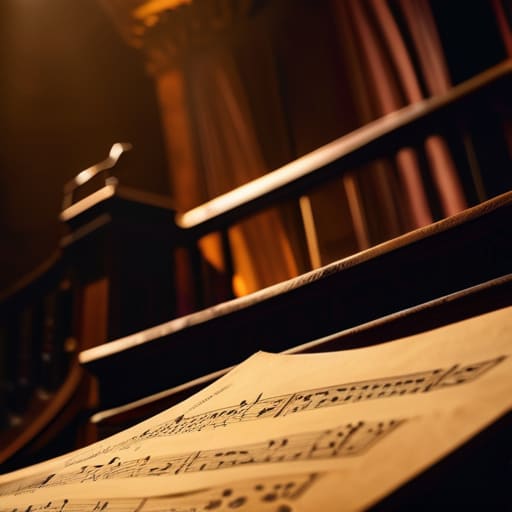
I’ve always felt that looking at a sheet of music is much like peering into an old ledger in the archives; at first, it’s just a collection of symbols, but if you linger, a story begins to emerge. To truly grasp the musical notation fundamentals, one must stop seeing them as mere instructions and start seeing them as a map for emotion. When I sit in a dimly lit club, watching a pianist’s hands dance across the keys, I realize that those black dots on the staff are actually the blueprints for the atmosphere.
It isn’t just about knowing where to place your fingers; it is about understanding intervals—the delicate, invisible spaces between the notes. A leap in pitch can feel like a sudden intake of breath, while a small step feels like a whispered confidence. Once you begin to recognize how these distances shape a melody, the music stops being a sequence of sounds and starts becoming a language of its own. It is the difference between simply hearing a song and actually listening to its soul.
Understanding Intervals and the Space Between Notes

If notation is the alphabet, then intervals are the breath between the words. When I sit in a dimly lit corner of a jazz club, watching a pianist lean into a chord, I’m not just hearing individual notes; I’m hearing the distance between them. Understanding intervals is really about recognizing the tension and the release that gives a melody its emotional weight. A small leap feels intimate, almost like a whispered secret, while a wide jump can feel like a sudden realization or a burst of light in a dark room.
It is in these gaps that the character of a piece is truly forged. You see this most clearly when we look at the difference between major and minor scales. A major third feels bright, like the sun hitting a brick facade in the afternoon, whereas a minor third carries that melancholic, shadowed quality that seems to suit a rainy Tuesday perfectly. It isn’t just math; it’s the architecture of feeling. By paying attention to these distances, you begin to grasp the melodic vs harmonic structure that allows a song to linger in your mind long after the final note has faded into the night.
Listening Between the Lines: Five Ways to Feel the Theory
- Don’t get lost in the math of a scale; instead, listen for how a single note feels when it finally finds its way home to the tonic.
- Pay attention to the tension in a dominant seventh chord—it’s much like the anticipation in a dimly lit room just before the first set begins.
- Treat rhythm not as a metronome’s rigid command, but as the natural heartbeat of a song that dictates how you breathe through the melody.
- Learn to recognize the color of a key signature, understanding that a shift from major to minor is less a rule and more a change in the evening’s mood.
- Practice active listening by trying to isolate a single instrument in a complex arrangement, much like noticing a single piece of carved molding in a grand, old hall.
The Echoes That Remain
Remember that music isn’t just a sequence of symbols on a page; it is a map of intention. When you look at notation, don’t just see instructions—see the breath and the pause that the composer intended to leave in the air.
Pay closer attention to the tension within an interval. Just as the shadow of a building gives its architecture depth, the “distance” between two notes is where the emotional weight of a melody truly resides.
Avoid the urge to rush through the technicalities. Understanding the mechanics of sound is merely a way to better appreciate the stillness that follows a perfect chord; learn the rules so you can better feel the soul of the song.
The Grammar of the Soul
“Don’t mistake theory for a set of rigid rules meant to constrain you; think of it more like the architecture of a well-built room. Once you understand how the beams and the foundations are laid, you can finally stop worrying about the structure and simply sit down to enjoy the warmth of the light.”
Petra Lindgren
The Resonance of the Details

We have wandered through the scaffolding of sound, from the structured lines of musical notation to the delicate, invisible tension held within intervals. It is easy to view these elements as mere technicalities—dry rules meant for textbooks or classrooms—but I have learned through years of cataloging history that nothing is truly sterile. When you understand how a note sits upon a staff or how two pitches dance together in a specific distance, you aren’t just learning math; you are learning to read the blueprints of human emotion. These fundamentals are the quiet architecture that allows a melody to stand tall and a harmony to feel like home.
As you close this notebook and step back into the world, I hope you don’t feel burdened by the weight of these rules, but rather liberated by them. The next time you find yourself in a dimly lit club, leaning against a mahogany bar while a saxophone breathes its last note, don’t just listen to the song. Listen to the intentionality behind the silence and the way the chords settle into the room. Music theory is not a cage; it is a lens. Use it to slow down, to notice the nuances, and to find the profound beauty in the way a single, well-placed note can change the entire temperature of an evening.
Frequently Asked Questions
If I can already feel the emotion in a melody, do I really need to learn the formal names for these structures?
It’s a fair question, and quite a poetic one. If you can feel the ache of a minor third without knowing its name, you’ve already mastered the most important part: the listening. But learning the formal names isn’t about replacing that feeling with cold logic; it’s about gaining a map of the terrain. It allows you to understand why a certain sequence pulls at your heart, turning a fleeting emotion into a language you can truly inhabit.
How do these mathematical intervals actually translate into the mood or "soul" of a jazz piece?
Think of it this way: math provides the skeleton, but the intervals provide the temperament. A perfect fifth feels like a sturdy, reliable pillar—the kind of sound that grounds a room. But when you introduce a minor second or a tritone, you’re adding tension, a sort of beautiful ache. It’s that slight dissonance that mimics the uncertainty of a rainy midnight. The math dictates the distance, but the soul lives in how those distances pull at your heart.
Is there a way to study these foundations without losing the spontaneity and magic of just playing by ear?
Think of theory not as a cage, but as a map of the terrain you’re already walking. I used to think learning notation would kill the feeling of a song, but it’s actually the opposite. It gives you the vocabulary to describe the magic you’re already feeling. Study the patterns so you can recognize them when they dance past you. Learn the rules just enough to know exactly how to break them beautifully.